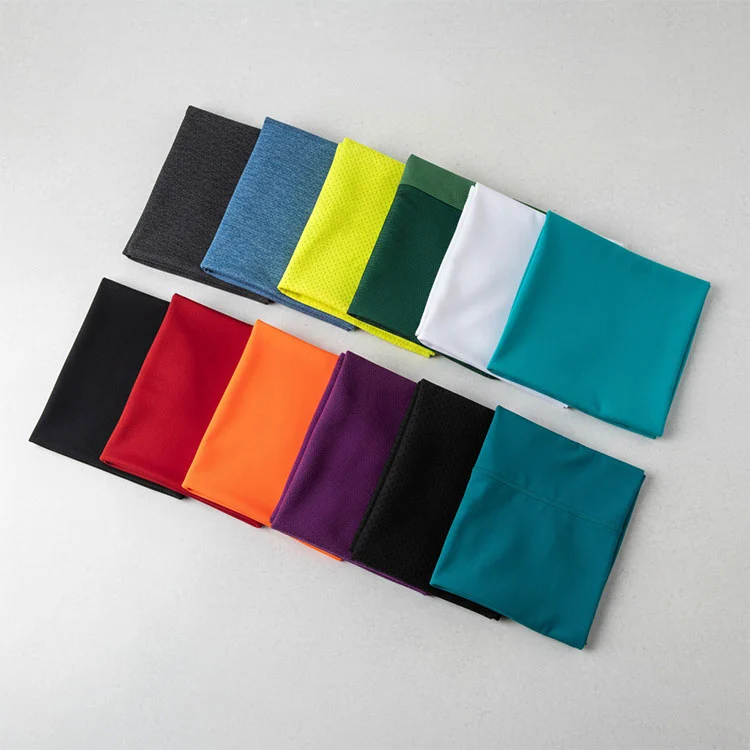
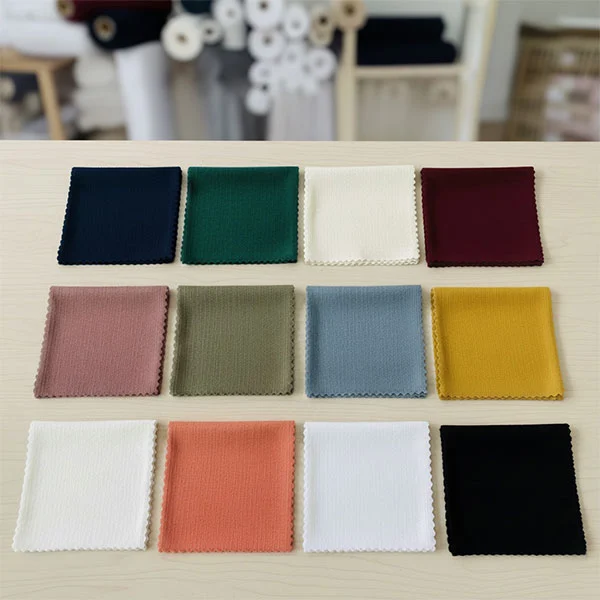
Polyester-Spandex Blend Fabric is a foundational textile in modern apparel manufacturing, prized for its ability to combine structural resilience with dynamic stretch. At Nashe Textile, we engineer this blend to meet the rigorous demands of sportswear, athleisure, intimate apparel, and medical garments. The synergy between polyester fibers and spandex filaments yields a fabric that withstands frequent washing, retains color vibrancy, and adapts to body movement without sagging. The following breakdown examines its composition, performance specifications, and practical applications while providing detailed technical parameters direct from our production line.
Understanding the Fiber Composition
The core appeal of the Polyester-Spandex Blend Fabric lies in its dual-fiber structure. Polyester contributes high tenacity, dimensional stability, and resistance to abrasion. Spandex, also known as elastane, introduces exceptional elongation and recovery. Nashe Textile carefully selects the denier of both components to calibrate the fabric's hand feel, stretch modulus, and longevity. Our standard blends range from 85% polyester / 15% spandex to 92% polyester / 8% spandex, with customized ratios available for specific end-uses.
Polyester is responsible for quick-drying behavior, wrinkle resistance, and holding shape. The polyester we use can be virgin or recycled, depending on sustainability requirements. Spandex ensures that the fabric stretches to at least 100% of its original length and snaps back without deformation. This partnership creates a cloth that moves with the wearer while retaining garment structure after hundreds of wear cycles.
Mechanical and Physical Properties
The performance of our Polyester-Spandex Blend Fabric is validated through a battery of standardized tests. The table below outlines typical results for a 150 cm wide, 200 g/m² construction with an 88/12 blend ratio.
| Parameter |
Test Method |
Nashe Textile Specification |
| Composition |
AATCC 20A |
88% Polyester, 12% Spandex (±2%) |
| Weight |
ASTM D3776 |
200 g/m² (±5%) |
| Width |
ASTM D3774 |
150 cm usable (60 inches) |
| Thickness |
ASTM D1777 |
0.48 mm (±0.05) |
| Breaking Strength (Warp) |
ASTM D5034 |
≥ 65 lbf |
| Breaking Strength (Weft) |
ASTM D5034 |
≥ 50 lbf |
| Elongation at Break (Warp) |
ASTM D5034 |
≥ 30% |
| Elongation at Break (Weft) |
ASTM D5034 |
≥ 120% (due to spandex content) |
| Stretch (Weft Direction) |
BS 4952 |
≥ 100% |
| Recovery after Stretch |
BS 4952 (after 30 min rest) |
≥ 95% |
| Dimensional Stability (Wash) |
AATCC 135 (40°C) |
≤ 3% in warp, ≤ 5% in weft |
| Colorfastness to Washing |
AATCC 61-2A |
Grade 4-5 |
| Colorfastness to Light |
AATCC 16.3 |
Grade 4 (40 hours) |
| Pilling Resistance |
ASTM D4970 (Martindale) |
Grade 4-5 after 1,000 cycles |
| Moisture Regain |
ASTM D2654 |
≤ 0.8% |
Key Advantages Engineered by Nashe Textile
- Four-Way Stretch Capability: Unlike conventional two-way stretch fabrics, our knitted constructions often deliver mechanical give in both warp and weft directions, supporting multidirectional movement for yoga, dance, and compression wear.
- Superior Opacity: Through tight gauge knitting and meticulous yarn selection, Nashe Textile achieves opacity even in light colors, eliminating the need for double-layer panels in many designs.
- Moisture Management: The polyester component inherently wicks perspiration away from the skin. We enhance this with specialized finishing treatments that accelerate evaporation and reduce cling.
- Anti-Microbial Options: Silver-ion or zinc-based finishes can be applied to inhibit bacterial growth, extending garment freshness. This is ideal for activewear and medical scrubs.
- UV Protection: Tight construction yields UPF ratings up to 50+, making the fabric suitable for outdoor sports apparel and swimwear cover-ups.
- Printability: The smooth surface accepts sublimation printing with high definition and color penetration. Nashe Textile pre-treats the fabric to optimize ink adhesion and wash fastness.
- Eco-Friendly Variants: We offer blends containing recycled polyester and even bio-based spandex, allowing brands to meet sustainability pledges without compromising performance.
Comparison with Alternative Blends
| Feature |
Polyester-Spandex (Nashe) |
Nylon-Spandex |
Cotton-Spandex |
| Durability |
Excellent; retains shape after repeated stretching |
Very good; but can lose elasticity faster in chlorine |
Moderate; cotton fibers break down and fade |
| Drying Time |
Very fast; hydrophobic nature |
Fast; slightly slower than polyester |
Slow; absorbs moisture |
| Color Retention |
Exceptional; resists bleeding |
Good; but may yellow over time |
Fair; prone to fading, especially darks |
| Cost Efficiency |
High; affordable raw materials and processing |
Higher cost; nylon is more expensive |
Mid-range; dependent on cotton quality |
| Weight-to-Stretch Ratio |
Lightweight with high power |
Heavier hand feel at same weight |
Bulkier; less control over stretch |
| Pilling Tendency |
Low when knit with suitable yarn twist |
Low |
Moderate to high |
Common Construction Methods
Nashe Textile produces Polyester-Spandex Blend Fabric primarily through circular knitting and warp knitting techniques. Single jersey with spandex plaiting yields a lightweight cloth ideal for base layers and T-shirts. Double jersey interlock offers more body and opacity for leggings and sports bras. Warp-knit power mesh and tricot provide controlled stretch for shapewear and compression garments. We also manufacture brushed versions where the polyester face is napped to create a soft fleece-like texture while spandex retains recovery.
Applications Across Industries
- Activewear and Athleisure: Leggings, sports tops, shorts, and unitards benefit from the fabric's ability to stretch and recover while keeping the wearer dry. Garment longevity is critical, and our blend resists bagging at knees and elbows.
- Swimwear: When combined with chlorine-resistant finishes, the polyester-spandex union outlasts traditional nylon blends in pools and saltwater. Colors stay vivid, and the fabric does not become transparent when wet.
- Intimate Apparel: Soft hand feel, breathability, and consistent stretch make it a staple in bras, panties, and shapewear. Nashe Textile's microfiber polyester options elevate luxury against the skin.
- Medical and Compression Garments: Graduated compression socks, post-surgical binders, and orthopedic braces rely on the calibrated stretch and durability. Antimicrobial finishes further increase functionality.
- Dance and Performance Costumes: The fabric takes metallic foils, sequins, and vibrant sublimation prints while maintaining a second-skin fit. Four-way stretch enables dramatic choreography without restriction.
- Uniforms and Corporate Wear: Blend with spandex improves the comfort of polyester uniforms without sacrificing a crisp appearance. Stretch panels in shirts and trousers enhance range of motion.
Product Line at Nashe Textile
We offer a curated selection of stock keeping units (SKUs) ready for immediate sampling, as well as custom development services. Below is a snapshot of our inventory:
| Item Code |
Construction |
Composition |
Weight (g/m²) |
Width (cm) |
Features |
| NT-PS-200 |
Single Jersey |
88% PET, 12% Spandex |
200 |
150 |
Wicking finish, UPF 40+ |
| NT-PS-240 |
Interlock |
90% PET, 10% Spandex |
240 |
155 |
Brushed back, anti-pill |
| NT-PS-160L |
Warp Knit Tricot |
85% PET, 15% Spandex |
160 |
150 |
High power stretch, for shapewear |
| NT-PSR-180 |
Single Jersey (Recycled) |
92% Repreve PET, 8% Spandex |
180 |
148 |
GRS certified, moisture management |
| NT-PS-300M |
Double Knit Mesh |
86% PET, 14% Spandex |
300 |
145 |
Compression level 2, breathable |
| NT-PS-120S |
Warp Knit Power Net |
80% PET, 20% Spandex |
120 |
150 |
Ultra-sheer, strong holding power |
Performance Testing and Quality Assurance
At Nashe Textile, every production lot undergoes in-line and final inspections. We monitor stitch density, yarn tension, and contamination throughout. Rolls are checked for barre defects, needle lines, and shade consistency under D65 lighting. Any lot not meeting AQL 2.5 level II is rejected before shipment. Clients receive a detailed test report including burst strength, seam slippage, and dimensional change results. This rigor ensures that the Polyester-Spandex Blend Fabric leaving our facility performs predictably on cutting tables and sewing lines globally.
Care and Maintenance Guidelines
- Machine wash cold (30°C) with like colors. Use a gentle cycle to preserve elastic integrity.
- Avoid fabric softeners; they can coat fibers and trap bacteria, diminishing wicking.
- Tumble dry low or line dry. High heat degrades spandex over time.
- Do not bleach; chlorine-based agents cause yellowing and elastic breakdown.
- Iron on low heat if necessary, but typically the polyester-spandex blend is wrinkle-free.
- For printed fabrics, turn garments inside out before washing to protect the design.
Frequently Asked Questions
What is the ideal polyester-to-spandex ratio for high-intensity training gear?
For high-intensity activities where sweat and friction are extreme, we recommend a blend of 85% polyester to 15% spandex. The higher spandex content delivers compression and support, while sufficient polyester ensures rapid moisture transport. Nashe Textile's NT-PS-160L with 15% spandex is often selected for sports bras and tight-fit training tops. If flexibility is more critical than compression, an 88/12 ratio works well and provides a lighter feel.
Can Polyester-Spandex Blend Fabric be custom dyed to match specific Pantone shades?
Absolutely. Nashe Textile offers lab-dip services using both piece dyeing and yarn dyeing methods. Polyester takes disperse dyes efficiently under high temperature, and we adjust dye recipes to achieve precise matches. We maintain a shade band to control delta E values below 1.0 for bulk production. For stretch-sensitive colors, we pre-stabilize the fabric to minimize shade variation after heat setting. Custom sublimate printing is also available on white base fabric, achieving vibrant, photo-real designs.
How does this blend perform in terms of odor control during prolonged wear?
Polyester itself has limited natural odor resistance, but the moisture-wicking property reduces the damp environment where bacteria thrive. Nashe Textile addresses remaining concerns by offering antimicrobial finish options using silver chloride or zinc pyrithione. These treatments are applied post-dye and are tested to remain effective beyond 50 home launderings. For brands targeting zero chemical additives, we can engineer a polyester with a specialized cross-section that inhibits bacterial adhesion.
Is the Polyester-Spandex Blend Fabric suitable for screen printing?
Yes, it is compatible with both plastisol and water-based screen printing. The key is to use a low-cure additive or reduce dryer temperature because spandex can be damaged by excessive heat. Nashe Textile pre-treats the fabric surface to reduce silicone oil residues from knitting, which improves ink adhesion. For stretch applications, we advise clients to use stretch inks to prevent cracking. Our technical team can recommend tested ink partners and curing profiles to achieve durable prints.
What sustainability certifications does Nashe Textile hold for this product category?
We are certified to the Global Recycled Standard (GRS), Oeko-Tex Standard 100 (product class I and II), and Higg Index FEM. Our recycled polyester-spandex line uses post-consumer bottle chips that are traced through the supply chain. We can provide transaction certificates for each batch. Additionally, we are developing blends with Roica™ degradable spandex and working toward Bluesign® system partner status. Every certificate is available for audit, ensuring full transparency.
What is the minimum order quantity for custom developments?
For stock fabrics like those listed in our table, we accept orders starting at 500 meters per color. For custom blends, weights, or finishes, the minimum runs from 1,000 to 2,000 meters depending on yarn sourcing complexity. Lab dips and strike-offs are provided free of charge for confirmed orders. Lead times range from 25 to 40 days for custom production, and we can accommodate seasonal urgency with pre-production planning. Nashe Textile supports startups by occasionally supplying sample yardage below minimums for prototyping.
Does the fabric remain opaque when stretched severely?
Opacity under stretch is a critical quality metric. Our interlock and double-knit constructions remain visually opaque up to 80% extension, which covers most garment wearing conditions. For white or pastel colors, we may add a light internal scattering treatment to prevent see-through. The Nashe Textile testing protocol includes a backlit stretch opacity test; fabrics that fail are not released. Customers specifying extremely high stretch applications should discuss intended use so we can propose an appropriate construction.
How does Nashe Textile ensure color consistency across production lots?
We use a spectrophotometer-based shade matching system integrated with our dyeing control software. Each lot is read under D65, TL84, and A10 light sources to prevent metamerism. The standard is held under controlled temperature and humidity. For continuous orders, we keep a trail swatch of the initial production for each subsequent batch, ensuring that a garment produced six months later matches perfectly. If a shade drifts, we adjust before the bulk run. Our tolerance is CIELAB delta E < 0.8 for solid colors.
Can the fabric be used for swimwear and chlorine exposure?
Yes, with the proper stabilization treatment. Standard polyester-spandex blends can suffer from elastic degradation in chlorinated water. Nashe Textile offers a chlorine-resistant finish that coats the spandex filaments, greatly extending the life of swimwear. We test these variants according to ISO 105-E03 and achieve minimal strength loss after 200 hours of continuous chlorine exposure. For competitive swim lines, our NT-PS-240 CR is a popular choice that passes stringent endurance tests.
What is the typical lifespan of garments made from this fabric?
Under recommended care conditions, garments produced from Nashe Textile's Polyester-Spandex Blend Fabric can remain functional for over 100 wear-wash cycles without significant loss of stretch or color. The primary failure mode in consumer use is heat damage from excessive dryer temperatures or ironing. Educational care labels can extend product life. We also offer extended-life spandex variants (dry-spun rather than melt-spun) that add approximately 20% more cycle life for premium brands.
Technical Support and Customization Services
Nashe Textile goes beyond delivering rolls of cloth. We provide a collaborative development service that includes knitting trials, finishing refinements, and performance validation. Whether a brand needs a specific compression level for recovery wear or a lightweight summer legging fabric with cooling minerals, our engineers co-create solutions. We maintain a library of over 200 polyester-spandex reference samples, accelerating the sampling process. Digital color communication and 3D virtual garment draping are used to visualize outcomes before the first meter is woven or knit.
The versatility of the Polyester-Spandex Blend Fabric ensures its continued dominance across performance apparel segments. With Nashe Textile's rigorous approach to material science and quality, you gain a textile partner capable of meeting aesthetic, functional, and sustainability demands simultaneously. Explore our stock line or initiate a bespoke development to elevate your next collection.