News

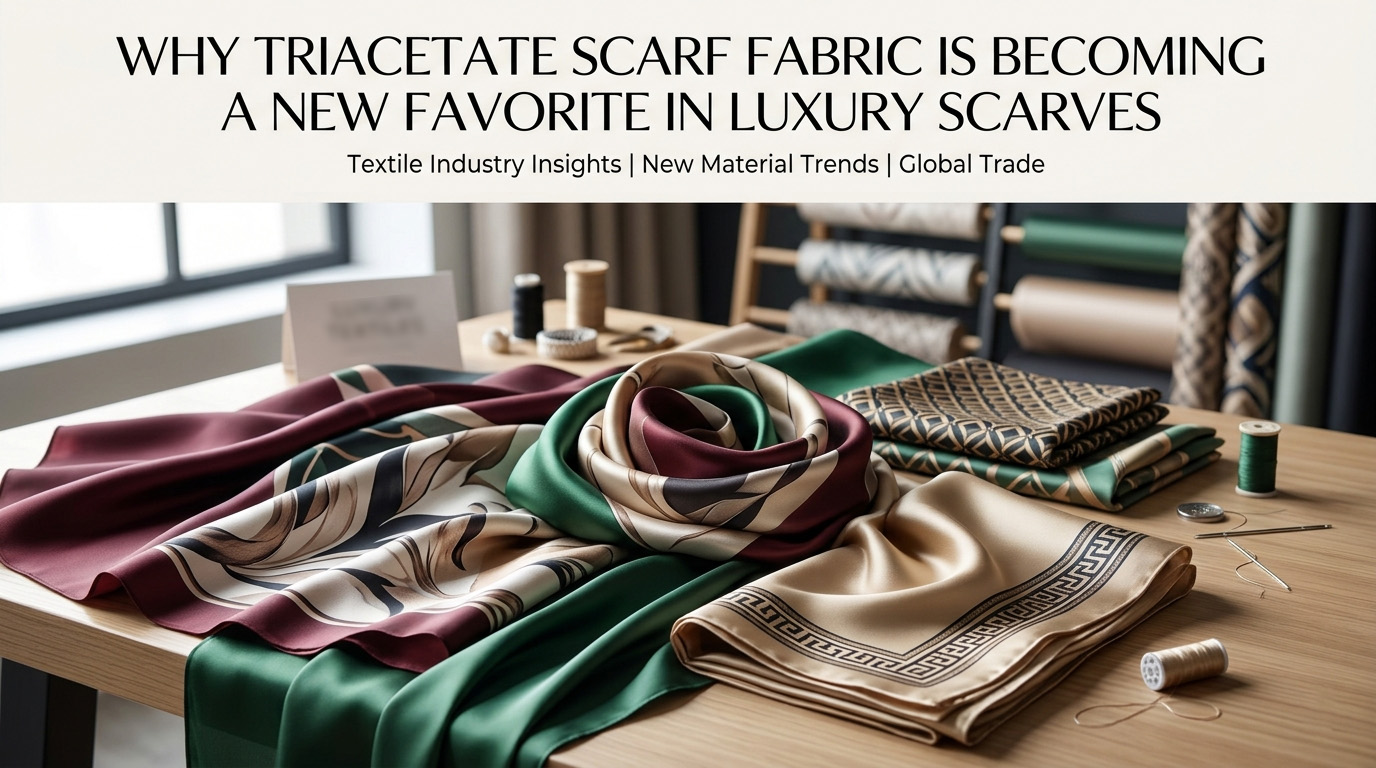
Why Triacetate Scarf Fabric Is Becoming a New Favorite in Luxury Scarves

2026-05-28 0 Leave me a message

Table of Contents

  1. Introduction to Triacetate Scarf Fabric in Luxury Fashion
  2. What Is Triacetate Scarf Fabric? (Fiber Basics & Composition)
  3. Why Triacetate Scarf Fabric Is Rising in Luxury Scarves
  4. Luster and Drape Performance of Triacetate Scarf Fabric
  5. Weaving Structures That Define Triacetate Scarf Fabric Quality
  6. Dyeing and Printing Innovation in Triacetate Scarf Fabric
  7. Comfort and Skin-Friendliness of Triacetate Scarf Fabric
  8. Durability and Wrinkle Resistance of Triacetate Scarf Fabric
  9. Sustainability and Eco-Friendly Value of Triacetate Scarf Fabric
  10. Future Trends in Triacetate Scarf Fabric for Luxury Brands
  11. FAQs on Triacetate Scarf Fabric

Key Takeaways

  • Triacetate Scarf Fabric is becoming a strong alternative to silk in luxury fashion.
  • It combines silk-like luster with better durability and easier care.
  • Fabric structure (satin, twill, plain weave) strongly impacts quality.
  • Digital printing enables high-end, artistic scarf designs.
  • It is more wrinkle-resistant than traditional silk.
  • Made from plant-based resources, it supports eco-conscious fashion.
  • Widely used in luxury scarves, shawls, and designer accessories.


1. Introduction to Triacetate Scarf Fabric in Luxury Fashion

Triacetate Scarf Fabric is rapidly emerging as one of the most discussed materials in modern luxury scarf collections. It offers a rare balance of elegance, durability, and easy maintenance, which positions it as a serious competitor to silk, polyester, and rayon in the premium segment.

For luxury brands, this fabric solves a long-standing tension: how to maintain a refined, high-end look while delivering better performance in real-life wear. Triacetate Scarf Fabric delivers a silk-like appearance without silk’s fragility and care complexity.

For buyers, designers, and wholesalers, that means fewer product returns, more satisfied end customers, and greater flexibility in collection planning. This article explains why the market is shifting toward this fabric and how structure, luster, comfort, and sustainability are driving its rising popularity in luxury scarves and accessories.


2. What Is Triacetate Scarf Fabric? (Fiber Basics & Composition)

Definition of Triacetate Scarf Fabric

Triacetate Scarf Fabric is a semi-synthetic material based on cellulose. The starting point is natural wood pulp, which is chemically treated with acetic acid derivatives to create triacetate fibers. These fibers are then spun into yarn and woven into scarf fabrics.

For buyers and sourcing teams, this means triacetate belongs to the “man-made cellulosic” family, sitting between natural fibers (like cotton and silk) and fully synthetic fibers (like polyester).

How It Is Made

During production, the cellulose is highly acetylated—more so than regular acetate. This higher degree of acetylation significantly improves:

  • Thermal stability
  • Dimensional stability
  • Resistance to wrinkling and deformation

Compared with regular acetate or rayon, triacetate fibers maintain their shape better, especially in the repeated folding, tying, and draping that scarves experience.

Key Properties

Core properties that matter for luxury scarf applications include:

  • Smooth texture – Provides a refined hand-feel close to silk.
  • Lightweight structure – Comfortable around the neck and shoulders without feeling heavy.
  • Silk-like sheen – A soft, elegant luster that supports premium positioning.
  • Improved wrinkle resistance – Less creasing in packaging, storage, and daily wear.

Why It Matters in Luxury Scarves

Luxury scarves must satisfy two demands simultaneously:

  1. Aesthetic excellence – Luster, drape, and color clarity.
  2. Functional performance – Durability, ease of care, and wearer comfort.

Triacetate Scarf Fabric effectively meets both requirements, making it highly attractive to luxury brands, design studios, and wholesalers building scalable, high-margin scarf programs.


3. Why Triacetate Scarf Fabric Is Rising in Luxury Scarves

Shift in Luxury Consumer Behavior

Today’s luxury consumer is not only buying “status” – they also expect practicality. The modern buyer wants:

  • A premium look and feel
  • Less complicated care routines
  • Products that travel well and maintain appearance over time

Silk is beautiful but demands delicate handling: specific detergents, careful ironing, and cautious storage. Triacetate Scarf Fabric offers a more forgiving alternative that still looks refined.

Advantages Over Traditional Fabrics

Compared to the most common scarf fibers:

  • Versus silk
    • More durable in repeated wear and handling
    • Better wrinkle resistance
    • Typically easier care (machine-washable depending on finish and construction)
  • Versus polyester
    • More elegant, less “plastic” luster
    • Softer, more natural hand-feel
    • Better drape for high-end styling
  • Versus rayon/viscose
    • More stable shape retention
    • Better wrinkle resistance
    • Often improved longevity in daily use

Brand Adoption

Fashion brands are increasingly specifying Triacetate Scarf Fabric for:

  • Seasonal luxury scarf drops
  • Designer shawls and wraps
  • Printed fashion accessories and capsule collaborations

For designers, it opens up design freedom without the heavy maintenance constraints of silk. For wholesalers, it offers a reliable, high-quality construction that withstands shipping, retail handling, and consumer use.

Market Trend Insight

The broader macro-trend is “low-maintenance luxury”: products that look premium but fit into a fast, mobile lifestyle. Triacetate Scarf Fabric aligns perfectly with this direction and is well positioned to gain further share in the premium scarf category.


4. Luster and Drape Performance of Triacetate Scarf Fabric

Silk-Like Luster

One of the reasons Triacetate Scarf Fabric is favored in the luxury segment is its elegant luster. The surface reflects light softly, creating a refined glow rather than a harsh, synthetic shine.

For designers, this means:

  • Patterns and colors appear vivid yet sophisticated
  • The fabric photographs well for e‑commerce and campaigns
  • The scarf looks premium on display and on the customer

Drape Behavior

Drape is critical for scarves. Triacetate Scarf Fabric falls smoothly and fluidly, wrapping naturally around the neck and shoulders. It supports:

  • Soft, cascading folds
  • Elegant knots and ties
  • Volume without stiffness

This fluidity is especially important for oversized scarves and shawls where poor drape can make a piece look bulky or cheap.

Why Drape Matters

In luxury scarves, drape often defines perceived quality. A stiff, boardy fabric suggests lower value, while a fabric that moves and flows with the body communicates premium craftsmanship.

Design Impact

Designers value Triacetate Scarf Fabric because:

  • It enhances visual movement in styling and photography
  • It showcases prints and motifs as the fabric moves
  • It supports advanced styling: knots, loops, wraps, and layering

Comparison Table

Fabric Type Luster Drape Maintenance
Silk High Excellent Difficult
Polyester Medium Medium Easy
Rayon Medium Good Moderate
Triacetate High Excellent Easy

For buyers and wholesalers, this combination of high luster, excellent drape, and easier care makes triacetate a compelling alternative to traditional options.


5. Weaving Structures That Define Triacetate Scarf Fabric Quality

The same fiber can feel very different depending on the weave. For Triacetate Scarf Fabric, three main structures dominate luxury scarf applications.

Satin Weave

  • Produces a smooth, glossy surface
  • Maximizes the natural luster of triacetate
  • Often used in evening, ceremonial, or giftable scarves

Satin-woven triacetate scarves are ideal when brands want a high-impact, glamorous finish that competes directly with silk satin.

Twill Weave

  • Creates fine diagonal ridges across the surface
  • Adds texture, body, and improved resistance to abrasion
  • Balances elegance with structure

Twill-woven Triacetate Scarf Fabric is ideal for everyday luxury scarves where durability and a slightly more “tailored” look are valued.

Plain Weave

  • The simplest, most balanced interlacing
  • Lightweight and breathable
  • Ideal for summer or trans-seasonal scarves

Plain-weave triacetate works well for brands wanting a lighter, airier hand-feel without sacrificing luster and color performance.

Why Structure Matters

Weaving structure directly affects:

  • Shine level – Satin is highest, twill moderate, plain more matte.
  • Fabric strength – Twill often adds robustness and resilience.
  • Pattern clarity – Finer weaves support sharper, more detailed prints.

For designers, the choice of weave is a strategic decision that controls both aesthetics and performance. For wholesalers and buyers, understanding weave enables better product positioning across seasons and price tiers.

Design Flexibility

Triacetate Scarf Fabric performs well in satin, twill, and plain weaves, giving mills and brands broad flexibility. This versatility allows:

  • Layered product lines (core, premium, seasonal, occasion)
  • Differentiated hand-feel and appearance using the same base fiber
  • Consistency in color and print performance across constructions

6. Dyeing and Printing Innovation in Triacetate Scarf Fabric

High Color Absorption

Triacetate fibers accept dye efficiently, resulting in deep, saturated colors with good levelness. For brands, this means:

  • Strong, vivid tones for statement pieces
  • Subtle, controlled shades for minimalist collections
  • Reliable color repeatability between production runs

Digital Printing Advantage

Triacetate Scarf Fabric is highly suited to modern digital printing technologies. This enables:

  • Sharp details – Fine lines, micro-motifs, and typography remain clear.
  • Artistic gradients – Smooth color transitions without banding.
  • Complex patterns – Photographic, abstract, or painterly designs.

For designers, digital printing on triacetate allows high-end artistic expression with fewer technical constraints than on some natural fibers.

Brand Expression

Luxury brands are increasingly using Triacetate Scarf Fabric as a storytelling canvas:

  • Botanical and floral narratives
  • Abstract and geometric graphics
  • Cultural, heritage, or city-themed prints

The stable surface and high color density help translate original artwork faithfully from studio to finished product.

Why It Stands Out

Compared to silk in mass-production scenarios, triacetate can offer:

  • More consistent print quality on large volumes
  • Less risk of unevenness or color variation between lots
  • Improved resistance to fading with appropriate dye systems and finishing

For wholesalers and private-label buyers, this stability means fewer complaints and a more reliable visual outcome at scale. Brands looking for customized printing solutions or luxury scarf fabric sourcing can also contact our team for more detailed production support and material recommendations.


7. Comfort and Skin-Friendliness of Triacetate Scarf Fabric

Soft Texture

Triacetate Scarf Fabric is engineered for a smooth, non-scratchy hand. Against the neck and face, it feels gentle, minimizing irritation even in extended wear.

This is especially important for:

  • Customers with sensitive skin
  • All-day office and travel use
  • Gifting, where fit and feel must satisfy a wide audience

Lightweight Comfort

The fabric’s lightweight nature makes it comfortable for daily use. It can be worn:

  • Indoors without overheating
  • Outdoors as a styling piece or light protection
  • Across seasons when combined with smart styling

Breathability

While triacetate is a man-made fiber, its cellulose origin and construction allow balanced airflow, especially in lighter weaves. The result is:

  • Less clamminess compared to some heavy synthetics
  • Improved comfort in moderately warm conditions
  • A good balance between coverage and breathability

For designers, this allows them to create scarves that are not only visually luxurious but also genuinely wearable in diverse climates.


8. Durability and Wrinkle Resistance of Triacetate Scarf Fabric

Shape Stability

Thanks to its high acetylation level, Triacetate Scarf Fabric maintains its shape well:

  • Edges stay cleaner with less rolling or distortion
  • The body of the scarf holds its intended dimensions
  • The overall appearance remains consistent after repeated wear

This stability is valuable for brands selling online, where customers expect the product to match the photos even after regular use.

Wrinkle Resistance

Unlike silk, which can crease easily and require careful ironing, triacetate offers strong wrinkle resistance:

  • Fewer hard creases after folding or packing
  • Scarves recover more easily from compression during shipping and storage
  • Lower risk of visible creases when customers unpack or gift the product

For travel-oriented collections and gifting programs, this is a decisive advantage.

Maintenance Benefits

From a care perspective, Triacetate Scarf Fabric typically offers:

  • Easy washing – Often compatible with gentle machine wash (always subject to specific finishing and care label).
  • Less ironing – Many wrinkles drop out naturally when hung.
  • Long-lasting appearance – Color, shape, and surface maintain their quality over time.

For buyers and wholesalers, this translates into lower after-sales issues and a stronger value proposition to retailers and end consumers.


9. Sustainability and Eco-Friendly Value of Triacetate Scarf Fabric

Plant-Based Origin

Triacetate is produced from cellulose, usually derived from wood pulp. While chemically modified, its origin is plant-based, unlike fully petroleum-derived synthetics.

This origin can support more responsible sourcing narratives when:

  • Wood comes from responsibly managed forests
  • Producers adhere to modern environmental standards

Environmental Benefits

Key sustainability-related advantages include:

  • Reduced reliance on petroleum-based fibers such as pure polyester
  • Improved product longevity, which slows replacement cycles and reduces waste

While triacetate is not a “purely natural” fiber, it occupies an important middle ground between conventional synthetics and traditional natural fibers.

Longevity Factor

The durability of Triacetate Scarf Fabric plays a subtle but important role in sustainability. Scarves that stay beautiful longer:

  • Are kept in the wardrobe for more seasons
  • Are resold, gifted, or passed on rather than discarded
  • Reduce the overall environmental load per wear

Fashion Industry Shift

As “sustainable luxury” becomes a core expectation rather than a niche, Triacetate Scarf Fabric provides brands with:

  • A premium look and feel
  • A partially plant-based story
  • A longer lifecycle product that supports conscious consumption

For designers and sourcing teams, it’s a fiber that aligns visual, functional, and sustainability goals more effectively than many conventional synthetics.


Digital Luxury Fashion

As digital print capabilities advance, Triacetate Scarf Fabric will remain a prime substrate for:

  • High-resolution, art-driven scarf designs
  • Limited-edition drops and collaborations
  • Online-exclusive colorways and motifs

Its stable printing performance makes it ideal for visually demanding digital-era branding.

Customization Trends

Personalization is a growing segment of luxury. Triacetate supports:

  • Short-run, customized designs
  • Initials, logos, and bespoke patterns
  • On-demand production models for online platforms

For wholesalers and private-label programs, this opens opportunities for co-branded or exclusive lines with retailers.

Functional Luxury

Future luxury scarves will increasingly combine beauty with function. Triacetate Scarf Fabric is well placed to support:

  • Travel-friendly, wrinkle-resistant collections
  • All-season pieces that bridge work, leisure, and travel
  • Performance-inspired luxury accessories that still feel refined

Market Outlook

Looking ahead, Triacetate Scarf Fabric is likely to expand further into:

  • Major fashion houses’ accessory lines
  • Boutique scarf and shawl brands seeking differentiation
  • Seasonal designer collections that balance artistry, comfort, and practicality

For buyers, designers, and wholesalers, now is a strategic moment to integrate triacetate into core and seasonal scarf assortments.Manufacturers including Ningbo Nashe Textile Co., Ltd are continuing to expand development capabilities in response to growing demand for premium triacetate scarf fabrics and customized luxury accessories.


11. FAQs on Triacetate Scarf Fabric

Is Triacetate Scarf Fabric better than silk?

It depends on the application. Silk remains the benchmark for natural luxury and heritage. However, Triacetate Scarf Fabric is:

  • Easier to maintain
  • Often more durable in real-life handling
  • More wrinkle-resistant

For everyday luxury and travel-friendly scarves, triacetate can be the more practical choice.

Does Triacetate Scarf Fabric wrinkle easily?

No. One of triacetate’s key advantages is strong wrinkle resistance compared with silk and many rayon/viscose constructions. It holds its appearance better through packing, folding, and daily wear.

Is it suitable for sensitive skin?

Yes, in most cases. The smooth, refined surface of Triacetate Scarf Fabric is generally comfortable and skin-friendly. As with any textile, individuals with specific sensitivities should test personally, but in mainstream use it is considered suitable for direct skin contact.

Is Triacetate Scarf Fabric eco-friendly?

It is partially eco-friendly. Triacetate is derived from plant-based cellulose, which differentiates it from purely petroleum-based fibers. Its durability and long product life further support more responsible consumption. However, it is still a chemically processed fiber, so its sustainability profile depends on responsible sourcing and production standards.

Can it be used for luxury brands?

Absolutely. Triacetate Scarf Fabric is already used in premium scarves, shawls, and designer accessories. Its silk-like luster, excellent drape, strong print performance, and easy-care profile make it a natural fit for modern luxury collections targeting both beauty and practicality.If you are exploring new scarf materials for upcoming collections, feel free to contact our team for fabric options, sampling support, and technical consultation.

Related News
Leave me a message
X
We use cookies to offer you a better browsing experience, analyze site traffic and personalize content. By using this site, you agree to our use of cookies. Privacy Policy
Reject Accept