News

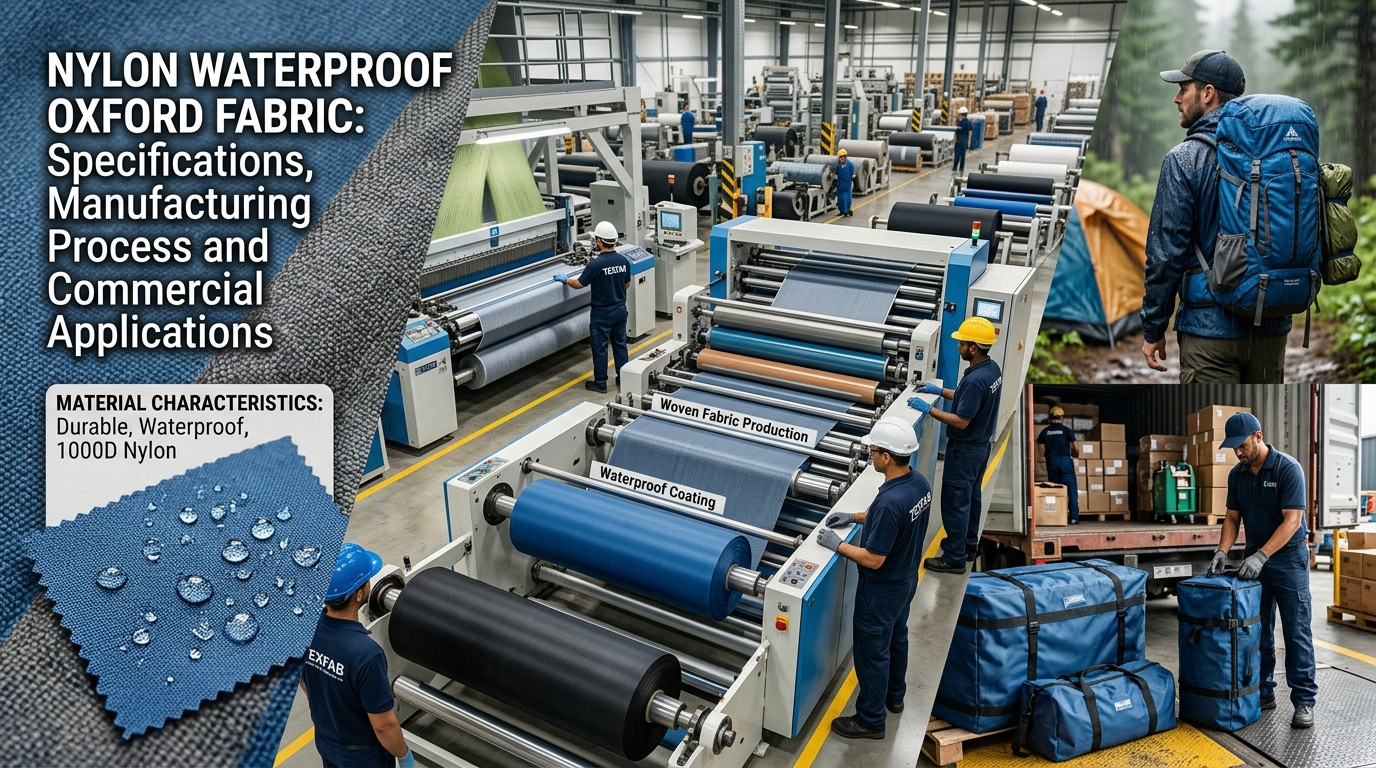
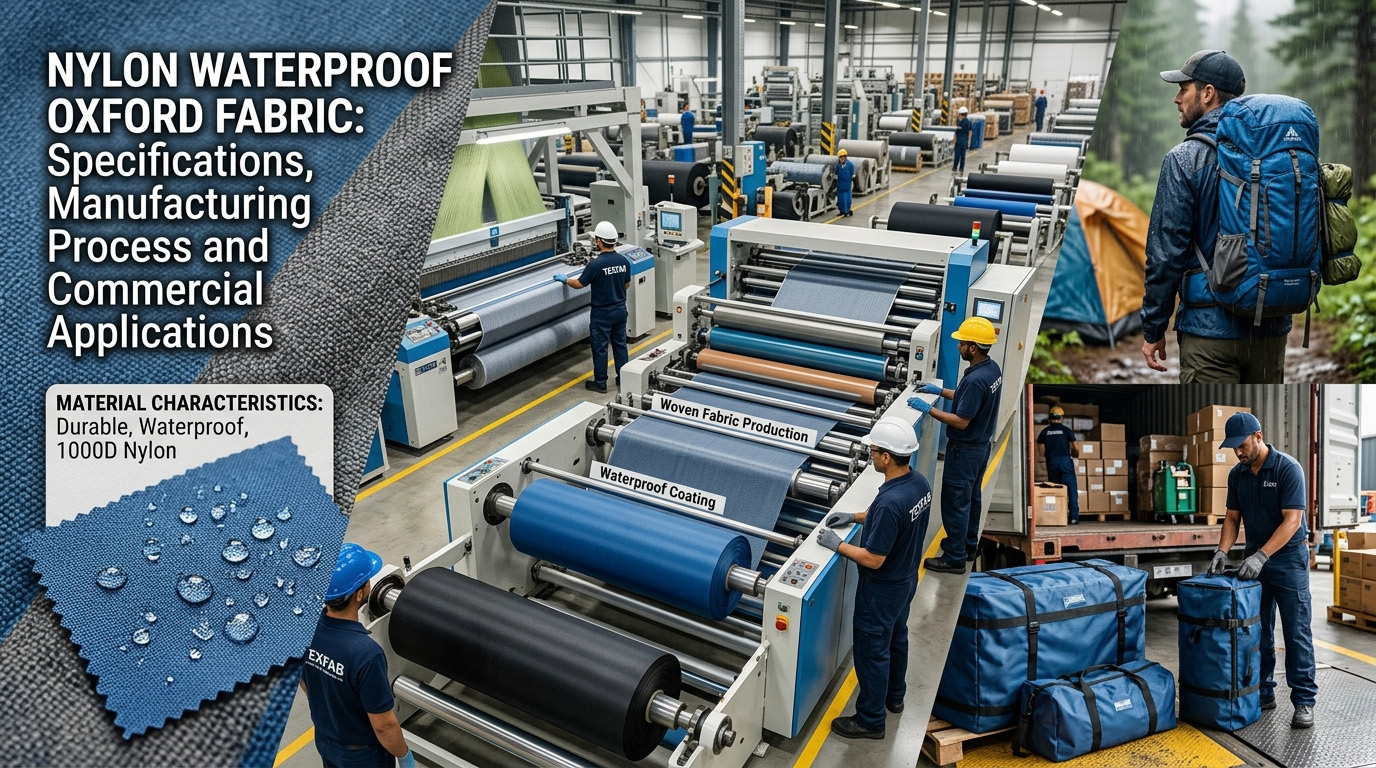
Nylon Waterproof Oxford Fabric: Specifications, Manufacturing Process and Commercial Applications

2026-06-25 0 Leave me a message

Introduction

Across outdoor, industrial, transportation, and consumer markets, demand for technical textiles is accelerating. Brands need materials that are lighter, stronger, more durable, and capable of performing in harsh environments.

Nylon waterproof Oxford fabric has become one of the most widely used solutions. It combines the mechanical strength of nylon with the structured stability of Oxford weaves and modern waterproof treatments. For buyers, designers, and wholesalers, understanding how this fabric is specified, manufactured, and applied in real products is critical for making the right sourcing decisions.

This article gives a practical, technical overview of:

  • What nylon waterproof Oxford fabric is and how it is constructed
  • Key specifications such as denier, GSM, hydrostatic pressure, and strength
  • Manufacturing processes from polymer to finished coated fabric
  • Waterproof and advanced finishing technologies
  • Performance characteristics and advantages in use
  • Commercial applications across multiple industries
  • How to choose the right fabric specification for your project
  • How to evaluate suppliers and manage sourcing risk
  • Sustainability developments and future industry trends

Table of Contents

  1. What Is Nylon Waterproof Oxford Fabric?
  2. Technical Specifications of Nylon Waterproof Oxford Fabric
  3. Manufacturing Process of Nylon Waterproof Oxford Fabric
  4. Waterproof Technologies and Advanced Finishing Treatments
  5. Performance Characteristics and Advantages
  6. Commercial Applications Across Industries
  7. How to Select the Right Nylon Waterproof Oxford Fabric
  8. Supplier Evaluation and Sourcing Considerations
  9. Sustainability and Future Industry Trends
  10. Conclusion
  11. FAQs

1. What Is Nylon Waterproof Oxford Fabric?

1.1 Definition and Basic Structure

Oxford fabric refers to a family of woven fabrics characterized by a structured, often basket-like weave. Compared with plain fabrics, Oxford constructions typically provide:

  • A more pronounced surface texture
  • Good dimensional stability
  • A balanced handle suitable for bags, covers, and protective products

Nylon waterproof Oxford fabric combines:

  • Nylon filament yarns in warp and/or weft (typically PA6 or PA66)
  • An Oxford or basket-style weave
  • One or more waterproof layers (coatings or laminates) and/or water-repellent finishes

Compared with other technical textiles (knits, nonwovens, or simple plain-woven fabrics), woven Oxford fabrics offer:

  • Higher structural stability for pattern cutting and stitching
  • Better resistance to tear propagation due to their weave geometry
  • A clean, technical appearance suitable for both consumer and industrial products

1.2 Why Nylon Is Used in Oxford Fabric

Nylon is favored as the base polymer because it offers an excellent balance of:

  • High tensile strength – maintains integrity under tension and load
  • Excellent abrasion resistance – resists wear from friction, critical for bags, luggage, and covers
  • Lightweight characteristics – high strength-to-weight ratio versus many other fibers
  • Flexibility and durability – good flex resistance, suitable for repeated folding and handling

For products such as backpacks, tactical gear, and industrial covers, this combination ensures performance without unnecessary weight.

1.3 Common Oxford Weave Constructions

Typical constructions used in nylon waterproof Oxford fabrics include:

  • Plain weave
    • Simple 1/1 over–under structure
    • High stability, good for lighter denier fabrics
  • Basket weave (2/2, 2/1, etc.)
    • Multiple warp threads crossing multiple weft threads
    • Creates a slightly textured, more “dimensional” surface
    • Often used in mid- to heavy-denier fabrics for additional body
  • Oxford weave variations
    • Modified basket or half-basket arrangements
    • Allow tuning of hand feel, drape, and visual effect

Influence of weave on performance

  • Tighter, more balanced weaves → higher tear resistance and better base water resistance
  • More open or decorative weaves → softer hand, but may require more robust coatings to achieve the same waterproof levels

2. Technical Specifications of Nylon Waterproof Oxford Fabric

For purchasing and product development, nylon waterproof Oxford fabric is typically defined by a combination of denier, yarn count, density, GSM, width, waterproof rating, and strength.

2.1 Understanding Fabric Denier (D)

Denier (D) is the mass in grams of 9,000 meters of yarn. It indicates yarn thickness and is one of the primary levers for balancing weight and durability.

Common deniers in nylon waterproof Oxford fabrics:

  • 210D
  • 420D
  • 500D
  • 840D
  • 1000D
  • 1680D

As a rule of thumb:

  • Lower denier (e.g., 210D) → lighter weight, more flexible, used for light bags and covers
  • Higher denier (e.g., 1000D, 1680D) → heavier, stiffer, highly durable, used for industrial and tactical products

2.2 Yarn Count and Fabric Density

Beyond denier, yarn count and fabric density (ends per inch / picks per inch or ends per cm / picks per cm) play critical roles:

  • Warp and weft yarn measurements define the balance between strength longitudinally and transversely.
  • Higher thread density typically improves:
    • Base-level water resistance (less porosity before coating)
    • Dimensional stability
    • Resistance to yarn slippage

For waterproof fabrics, density must be engineered together with the coating system to meet hydrostatic pressure targets.

2.3 Fabric Weight (GSM)

GSM (grams per square meter) expresses fabric weight and reflects the combination of:

  • Denier
  • Fabric density
  • Coating/lamination thickness

Relationship between GSM and end use:

  • Lightweight (e.g., 120–200 gsm)
    • Daypacks, light rain covers, stroller covers
  • Medium weight (e.g., 200–300 gsm)
    • Travel bags, tents, outdoor furniture covers
  • Heavy / heavy duty (e.g., 300–500+ gsm)
    • Industrial tarpaulins, tactical gear, transportation applications

2.4 Fabric Width Options

Typical commercial widths include:

  • Common widths: approx. 57–60" (145–152 cm) for many bag and garment applications
  • Wider widths: 160–200 cm or more for industrial covers, tarps, or large-format applications

Custom widths can be woven or slit to order, depending on loom and finishing capabilities.

2.5 Hydrostatic Pressure Ratings

The hydrostatic pressure rating measures how much water pressure a fabric can withstand before leakage, usually expressed in mm of water column (mmH₂O).

  • Entry-level waterproof: approx. 1,000–2,000 mmH₂O
  • Outdoor gear standard: approx. 3,000–5,000 mmH₂O
  • High-performance industrial or extreme outdoor: 8,000–10,000+ mmH₂O

Required ratings depend on the application and regulatory or brand standards.

Table 1: Comparison of Common Nylon Waterproof Oxford Fabric Specifications

pecification Typical GSM Durability Common Applications
210D Light Moderate Daypacks, simple backpacks, light covers
420D Medium Good Luggage shells, outdoor gear, pet products
500D Medium-Heavy Very Good Tactical bags, premium backpacks, gear bags
840D Heavy Excellent Industrial covers, tool bags
1000D Heavy Duty Outstanding Military equipment, high-load backpacks
1680D Ultra Heavy Maximum Transportation, industrial protection

2.6 Tensile Strength and Tear Resistance

In demanding environments, tensile strength (breaking strength) and tear resistance are critical.

  • Tensile strength: resistance to being pulled apart; key for load-bearing seams and straps.
  • Tear strength: resistance to the growth of small cuts; crucial for puncture-prone products.

Testing generally follows standards such as:

  • Grab or strip tensile tests
  • Elmendorf or trapezoid tear tests

Buyers should review test reports and confirm that performance meets internal specifications for the intended use.


3. Manufacturing Process of Nylon Waterproof Oxford Fabric

3.1 Nylon Polymer Production and Yarn Extrusion

  1. Polymer preparation

    • Nylon chips (typically PA6 or PA66) are dried and melted.
  2. Filament spinning

    • Melt is extruded through spinnerets to form continuous filaments.
    • Filaments are cooled, collected, and prepared for further processing.

3.2 Yarn Drawing and Texturizing

  • Drawing stretches filaments to align polymer chains, increasing strength and reducing elongation.
  • Texturizing (where required) introduces bulk or specific surface textures to adjust hand feel and interlacing behavior during weaving.

3.3 Fabric Weaving Process

  • Yarns are warped and sized as needed.
  • Loom technologies (air-jet, rapier, water-jet, etc.) are selected according to denier and fabric style.
  • Warp and weft are interlaced in the chosen Oxford/basket or plain construction.

Precision in warp tension, loom settings, and density is essential to maintain consistent fabric quality.

3.4 Dyeing and Coloration

Two main approaches:

  • Piece dyeing
    • Fabric is woven first, then dyed.
    • Allows flexible color changes and smaller batch runs.
  • Solution dyeing (dope dyeing)
    • Pigments are added to the polymer melt before extrusion.
    • Delivers excellent color fastness and reduced water/chemical use.
    • Particularly attractive for outdoor and industrial customers prioritizing color consistency and sustainability.

Color consistency across batches is controlled through strict recipes and laboratory approvals.

3.5 Heat Setting and Stabilization

Heat setting stabilizes the fabric:

  • Improves dimensional stability
  • Reduces shrinkage during subsequent coating, lamination, and end-use conditions
  • Optimizes handle and surface appearance

3.6 Coating and Lamination Processes

To achieve waterproof performance, fabrics are treated via:

  • PU (polyurethane) coating – one or multiple layers applied to the back side
  • PVC (polyvinyl chloride) coating – thicker, more rigid coatings for heavy-duty use
  • TPU (thermoplastic polyurethane) lamination – films bonded to the fabric for premium waterproof-breathable solutions

Coating weight, number of passes, and curing conditions directly influence hydrostatic pressure and durability.

3.7 Quality Inspection and Testing

Typical quality controls include:

  • Waterproof testing – hydrostatic pressure tests, spray tests
  • Mechanical testing – tensile, tear, seam strength, abrasion resistance
  • Appearance inspection – surface defects, color shade/levelness, coating uniformity, width and GSM verification

Only fabrics meeting the target specifications move to packing and shipment.


4. Waterproof Technologies and Advanced Finishing Treatments

4.1 PU Coating Technology

PU coatings are widely used thanks to:

  • Good flexibility and soft hand feel
  • Adequate waterproof levels for most bags, covers, and outdoor products
  • Versatility in thickness and performance tuning

Typical applications: backpacks, tents, stroller covers, pet products, rainwear linings.

4.2 PVC Coating Systems

PVC coatings are selected when:

  • Maximum durability and stiffness are needed
  • Chemical resistance and long-term weathering are priorities

Industrial and transportation products—such as tarps and truck covers—often use PVC-coated nylon or polyester bases.

4.3 TPU Lamination Technology

TPU laminates provide:

  • Very high waterproof ratings
  • Superior flexibility and low-temperature performance
  • Better environmental profile than traditional solvent-based coatings in many systems

Common for premium outdoor gear, medical applications, and high-value protective covers.

4.4 Durable Water Repellent (DWR) Finishes

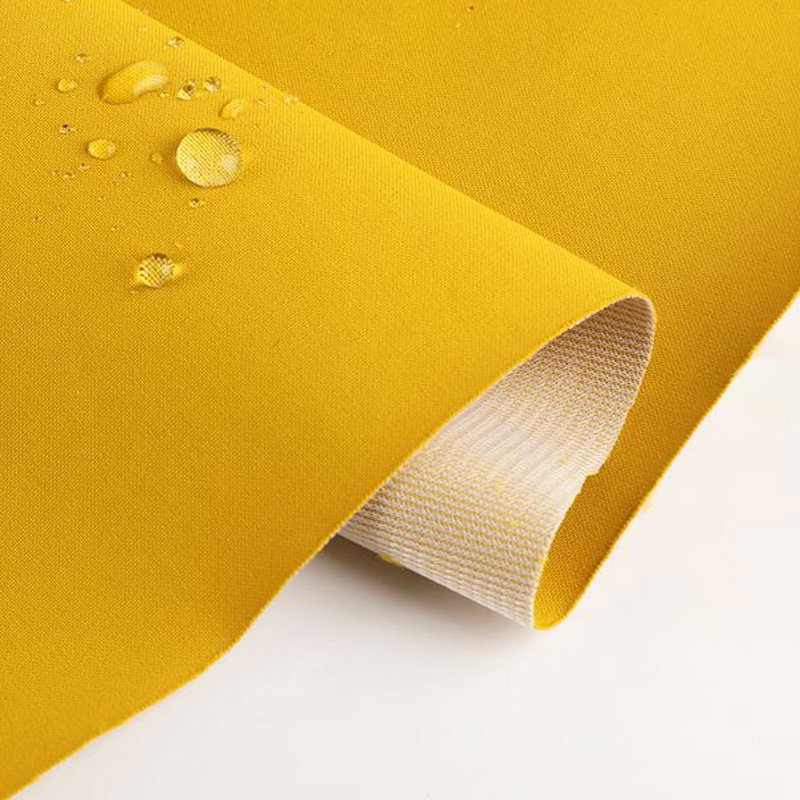
DWR treatments are applied to the fabric face to:

  • Cause water to bead and roll off
  • Reduce surface wetting, improving comfort and drying times
  • Complement back-side coatings or laminations

Modern DWR systems increasingly focus on PFC-free chemistries for sustainability.

4.5 UV Resistant Treatments

For prolonged outdoor exposure:

  • UV stabilizers are added or applied to protect both nylon and coatings from degradation.
  • Extend color life and mechanical performance under sunlight.

Typical for outdoor furniture covers, tents, and marine applications.

4.6 Flame Retardant Finishes

Certain applications require flame retardant (FR) performance:

  • Use of FR additives or coatings
  • Compliance with regional standards (e.g., for transportation, workwear, or public spaces)

Buyers must match FR specifications to local regulations and end-use environments.

4.7 Anti-Mildew and Anti-Bacterial Treatments

In humid or enclosed conditions:

  • Anti-mildew finishes prevent mold growth on stored items and covers.
  • Anti-bacterial treatments are increasingly requested for baby products, medical covers, and pet products.

These finishes preserve appearance, odor control, and hygiene during storage and use.


5. Performance Characteristics and Advantages

5.1 Abrasion Resistance

Nylon fibers and Oxford weaves create excellent resistance to scuffing and surface wear, critical for luggage, backpacks, and industrial products.

5.2 Tear Strength

Balanced constructions and appropriate denier selections deliver high tear strength, minimizing failure from accidental punctures or sharp edges.

5.3 Waterproof Protection

Combined waterproof systems (coating, lamination, DWR) offer tunable waterproof performance across a wide hydrostatic pressure range.

5.4 Lightweight Construction

Compared to many rigid materials or heavier textiles, nylon waterproof Oxford fabrics provide robust performance at comparatively low weight, improving user comfort and portability.

5.5 Flexibility and Processability

The fabric:

  • Cuts and sews well on standard industrial equipment
  • Accepts printing, laser cutting, and various finishing operations
  • Works in complex patterns and 3D constructions

5.6 Long-Term Durability

With appropriate coatings and finishes, nylon waterproof Oxford fabric can withstand:

  • Repeated flexing and folding
  • Outdoor exposure
  • High mechanical loads

This durability supports lower whole-life costs for end users.

Table 2: Key Performance Characteristics of Nylon Waterproof Oxford Fabric

Property Performance Level Commercial Benefit
Abrasion Resistance Excellent Longer product life
Tear Resistance High Reduced field failures
Waterproof Rating Customizable Reliable weather protection
Weight Lightweight Easier handling/transport
Flexibility Good Broad design possibilities
UV Resistance Optional Extended outdoor durability

6. Commercial Applications Across Industries

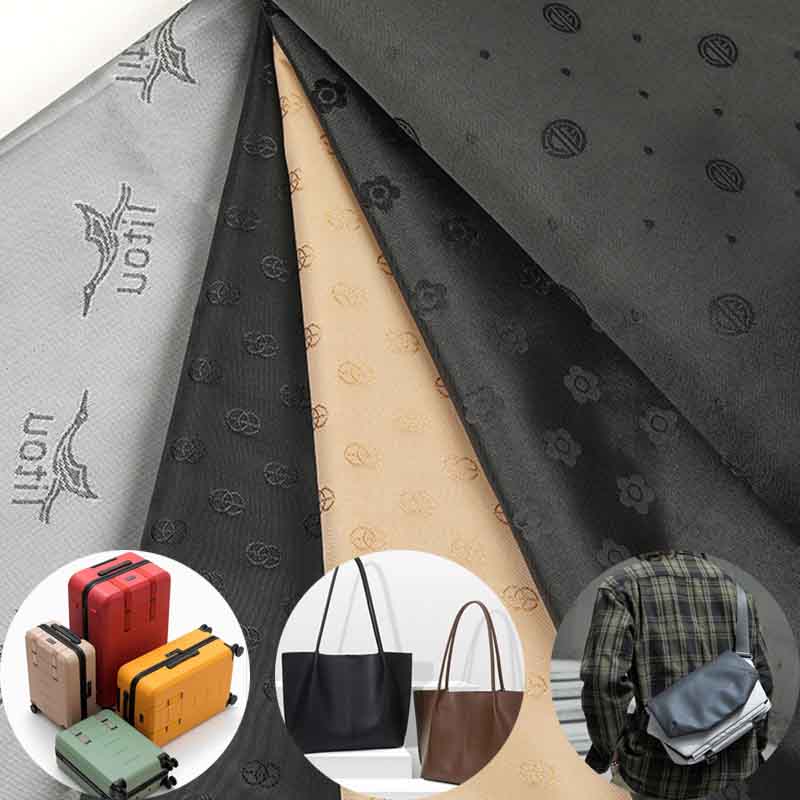
6.1 Backpacks and Travel Bags

Used for shells, pockets, and structural panels in daypacks, hiking packs, and school bags.

6.2 Luggage Manufacturing

Provides durable outer shells and reinforcement zones for suitcases, trolleys, and travel accessories.

6.3 Tent and Camping Equipment

Applied in tent floors, flysheets, gear lofts, and accessory bags, balancing waterproofness with packable weight.

6.4 Outdoor Furniture Covers

Protects outdoor seating, grills, and equipment from rain, UV, and dirt.

6.5 Protective Equipment Covers

Used for machinery covers, generator covers, tool bags, and on-site protective products.

6.6 Pet Products and Accessories

Ideal for durable pet beds, carriers, leashes, and outdoor mats where abrasion and cleanability matter.

6.7 Baby Products

Used in stroller canopies, diaper bags, and protective covers, often with additional safety and hygiene finishes.

6.8 Military and Tactical Equipment

Higher deniers (500D, 1000D, 1680D) serve in tactical vests, plate carrier covers, pouches, and heavy-duty field gear.

6.9 Workwear Accessories

Forms the basis of tool belts, kneepads, safety gear bags, and protective aprons.

6.10 Transportation Packaging Solutions

Applied in reusable transport bags, cargo covers, and logistics packaging systems.

Industry-Specific Fabric Recommendations

  • Lightweight outdoor products
    • 210D–420D nylon Oxford with PU coating and optional DWR.
  • Heavy-duty industrial products
    • 840D–1680D nylon Oxford with PVC or heavy PU coating; optional FR, UV, and anti-mildew treatments.
  • Premium travel equipment
    • 420D–1000D solution-dyed nylon Oxford with high-quality PU or TPU systems for superior aesthetics and durability.

7. How to Select the Right Nylon Waterproof Oxford Fabric

7.1 Define Product Requirements

Start from the product:

  • Application type (bag, cover, tent, industrial protection, etc.)
  • Expected environment (indoor, outdoor, marine, high UV, cold climate)

7.2 Evaluate Waterproof Performance

Clarify:

  • Minimum hydrostatic pressure rating
  • Whether the product must remain waterproof under pressure, bending, and seam stress

7.3 Assess Abrasion and Tear Resistance

Define expected service life:

  • High-wear items (luggage, tactical gear) demand higher denier and stronger constructions.
  • Occasional-use covers can utilize lighter constructions.

7.4 Review Color Fastness

For outdoor and consumer products:

  • Confirm color fastness to light, washing, and rubbing.
  • Consider solution-dyed options where maximum color stability is needed.

7.5 Consider Fabric Weight and Flexibility

Balance:

  • User comfort (carrying weight, packability)
  • Structural needs (shape retention, protection level)

7.6 Verify Environmental Compliance

Check that fabrics and coatings comply with:

  • REACH (EU chemicals regulation)
  • RoHS (restriction of hazardous substances, where applicable)
  • OEKO-TEX or similar certifications for human-ecological safety

7.7 Customization Requirements

Confirm possibilities for:

  • Custom colors and prints
  • Embossing or texture
  • Special finishes (FR, anti-mildew, anti-bacterial, anti-static, reflective, etc.)

8. Supplier Evaluation and Sourcing Considerations

8.1 Manufacturing Capacity

Assess whether the supplier can meet:

  • Required monthly or annual production volumes
  • Lead times for development, sampling, and bulk orders

8.2 Quality Control Systems

Look for:

  • Documented testing procedures (waterproof, tensile, tear, color fastness, etc.)
  • Incoming, in-process, and final inspection standards
  • Availability of test reports and third-party certifications when required

8.3 Product Development Support

A strong partner offers:

  • Technical consultation on denier, coatings, and finishing combinations
  • Sampling services for lab dips, strike-offs, and pilot yardage

8.4 Customization Capabilities

Evaluate whether the mill can deliver:

  • Tailored coatings (PU, PVC, TPU, multi-layer systems)
  • Custom constructions and GSM ranges
  • Branded finishes, printing, and post-processing

8.5 Communication and Service

Clear, responsive communication shortens development cycles and reduces risk.

Buyers are strongly advised to contact our team early in product development to:

  • Validate fabric specifications
  • Align performance expectations
  • Plan sampling and production timelines

8.6 Working with Reliable Textile Manufacturers

Key criteria include:

  • Proven export experience
  • Stable financial and operational background
  • Transparent documentation and traceability
  • Positive track record with international brands

Ningbo Nashe Textile Co., Ltd is one example of a textile manufacturer serving global markets with customized nylon waterproof Oxford fabrics and related technical textile solutions, supporting buyers, designers, and wholesalers with flexible specifications and tailored finishing options.


9.1 Recycled Nylon Fiber Development

Demand for recycled nylon (e.g., from pre-consumer waste or recovered fishing nets) is rising, enabling lower environmental impact while maintaining performance.

9.2 Solvent-Free Coating Technologies

Coating lines are transitioning towards:

  • Water-based and solvent-free PU systems
  • Reduced VOC emissions and improved worker safety

9.3 Bio-Based Material Innovations

Emerging solutions include:

  • Bio-based polyamides
  • Bio-derived additives and finishes

These aim to lower reliance on fossil-based raw materials.

9.4 Lightweight High-Performance Fabrics

Advances in polymer engineering and weaving allow:

  • Lower denier constructions with enhanced strength
  • Thinner laminates that maintain or improve waterproof ratings

9.5 Advanced Composite Textile Structures

Multi-layer structures combining:

  • Nylon waterproof Oxford base fabrics
  • Functional membranes, foams, or nonwovens

deliver integrated performance (waterproof, thermal, acoustic, or impact protection).

9.6 Growing Regulatory Requirements

Global brands must meet increasingly strict regulations around:

  • Chemical management and restricted substances
  • End-of-life and recyclability
  • Carbon and environmental reporting

9.7 Future Market Opportunities

Key opportunity areas:

  • Circular economy models and closed-loop recycling
  • Lower-carbon manufacturing processes
  • Next-generation, sustainable waterproof technologies that balance performance with environmental responsibility

Conclusion

For buyers, designers, and wholesalers, nylon waterproof Oxford fabric offers a powerful combination of strength, durability, and design flexibility across multiple markets.

Understanding:

  • Specifications such as denier, GSM, density, and hydrostatic pressure
  • Manufacturing processes from polymer to coated or laminated fabric
  • Waterproof and finishing technologies (PU, PVC, TPU, DWR, FR, UV, anti-mildew, anti-bacterial)

enables better product design, accurate cost–performance trade-offs, and more reliable sourcing decisions.

Selecting capable suppliers, confirming quality control systems, and integrating sustainability criteria—such as recycled nylons and solvent-free coatings—position your product line for future regulatory and market expectations.

As the global technical textile industry continues to innovate, nylon waterproof Oxford fabric will remain a foundation material, continuously refined to meet the next generation of performance and sustainability demands.


Frequently Asked Questions (FAQs)

What is Nylon Waterproof Oxford Fabric made from?

It is made from nylon filament yarns woven in an Oxford-style or basket weave, then treated with waterproof coatings or laminations and often additional water-repellent finishes.

What is the difference between 420D and 1000D Nylon Waterproof Oxford Fabric?

  • 420D is lighter and more flexible, suitable for standard luggage, bags, and outdoor gear.
  • 1000D is significantly heavier and more robust, designed for tactical, military, and heavy-duty industrial products.

How is waterproof performance measured?

Waterproof performance is typically measured by hydrostatic pressure tests, expressed in mmH₂O. Higher values indicate higher resistance to water penetration.

Which coating is better: PU, PVC, or TPU?

It depends on your application:

  • PU – versatile, flexible, and suitable for most consumer and light industrial products.
  • PVC – robust, stiff, and resistant for heavy-duty and industrial uses.
  • TPU – premium, highly waterproof, flexible, and often more environmentally progressive; ideal for high-performance gear.

Is Nylon Waterproof Oxford Fabric suitable for outdoor applications?

Yes. When combined with appropriate coatings, UV stabilization, and DWR finishes, it performs very well in outdoor environments, from camping to industrial covers.

Can Nylon Waterproof Oxford Fabric be customized?

Yes. It can be customized in:

  • Denier, GSM, and density
  • Colors (piece-dyed or solution-dyed), prints, and textures
  • Coatings and special finishes (FR, UV, anti-mildew, anti-bacterial, etc.)

What certifications should buyers look for when sourcing fabrics?

Relevant certifications may include:

  • OEKO-TEX (human-ecological safety)
  • Compliance with REACH and RoHS
  • Additional brand- or region-specific standards for FR, environmental, or sustainability requirements.

How long does waterproof Oxford fabric typically last?

Service life depends on specification and usage. High-denier fabrics with robust coatings and UV/FR protection can perform for many years in normal use, especially when properly maintained and stored.

Is recycled Nylon Waterproof Oxford Fabric available?

Yes. Increasingly, mills offer nylon waterproof Oxford fabrics based on recycled nylon yarns, combined with more sustainable coating and finishing options.

How can buyers choose a reliable supplier?

Look for:

  • Proven experience with nylon waterproof Oxford fabrics
  • Robust testing and quality control systems
  • Transparent documentation and certifications
  • Strong communication and development support

Partnering with specialized manufacturers such as Ningbo Nashe Textile Co., Ltd helps ensure consistent quality, tailored specifications, and long-term supply stability.

Related News
Leave me a message
X
We use cookies to offer you a better browsing experience, analyze site traffic and personalize content. By using this site, you agree to our use of cookies.Privacy Policy
RejectAccept