Sustainability is no longer a “nice to have” in textiles; it is now a core purchasing requirement for global brands and professional buyers. Environmental regulations, rising raw material costs, and growing consumer awareness are forcing the industry to rethink how fabrics are designed, sourced, and produced.
Within this shift, Recycled Eco-Friendly Cotton Fabric has become a strategic material for fashion labels, home textile manufacturers, and industrial buyers who need both performance and verified sustainability. Instead of relying only on virgin cotton, mills are increasingly using post-consumer garments, production scraps, and industrial cotton waste to create high-value recycled cotton textiles.
Recycled cotton not only reduces pressure on land, water, and pesticides; when it is properly engineered and certified, it can meet the quality expectations of leading brands and international sourcing teams. Certifications such as GRS, OEKO-TEX, and BCI-aligned alternatives are now essential checkpoints for serious importers and wholesalers.
As a professional supplier of sustainable cotton fabrics, Ningbo Nashe Textile Co., Ltd. supports buyers, designers, and wholesalers with customized recycled cotton solutions, stable quality, and full documentation. If you are exploring new sustainable programs or need to upgrade existing lines, you are welcome to contact our team for development support.
Recycled Eco-Friendly Cotton Fabric is a textile produced from reclaimed cotton fibers instead of freshly grown (virgin) cotton. The raw material typically comes from:
Compared with virgin cotton, recycled cotton:
From a buyer’s perspective, recycled cotton textiles can be engineered to achieve similar handfeel, durability, and appearance to conventional sustainable cotton fabric, especially when combined with smart blending and finishing.
Typical recycled cotton sources include:
Post-consumer textile waste
Old garments, returned products, used household linens, and end-of-life textiles collected through take-back or recycling programs.
Pre-consumer manufacturing scraps
Cutting room waste, offcuts, roll ends, and rejected lots from garment factories or mills that have never reached the consumer.
Industrial cotton waste
Waste generated in spinning, weaving, knitting, or finishing processes, such as slivers, yarn ends, and defective fabric portions.
Old garments and household textiles
T‑shirts, denim, towels, bedsheets, and curtains that are collected, sorted, and processed into new recycled cotton textile materials.
The move toward recycled cotton textile solutions is being driven by:
Rising environmental concerns
Water scarcity, soil degradation, and pollution linked to conventional cotton are under intense scrutiny.
Pressure from consumers and retailers
Eco-conscious consumers expect transparent, traceable, and low-impact materials; retailers respond with strict sustainability standards.
Government regulations on textile waste
Landfill reduction programs and extended producer responsibility (EPR) schemes are pushing brands toward textile recycling.
Demand for sustainable sourcing
Global buyers increasingly require sustainable apparel fabrics and low-carbon textile production across their supplier network.
Conventional cotton, even when managed responsibly, faces several challenges:
High water consumption
Traditional cotton farming is water-intensive, especially in arid regions.
Pesticide and fertilizer use
Heavy use of crop protection chemicals and fertilizers affects biodiversity, soil health, and nearby communities.
Land use concerns
Large areas of agricultural land are required to grow cotton, competing with food crops.
Energy-intensive farming and processing
From irrigation pumping to ginning and spinning, conventional cotton has a notable energy footprint.
These issues are pushing brands to consider BCI cotton alternatives and recycled options as part of their sustainability portfolio.
Shifting part of your sourcing to Recycled Eco-Friendly Cotton Fabric reduces environmental pressure in several ways:
Reduces landfill waste
Diverts post-consumer and pre-consumer textiles from landfills and incineration.
Decreases dependence on virgin cotton
Lessens demand for new cotton cultivation and the associated land, water, and agrochemicals.
Lowers water and energy usage
Because fiber production from waste does not require new farming, it significantly cuts water use and upstream energy demand.
Supports circular textile production
Enables a more circular textile economy, where textile recycling and reuse are embedded in the production model.
Market demand for eco-friendly textile materials is rising across all major regions:
| Feature | Conventional Cotton | Recycled Eco-Friendly Cotton Fabric |
| Water Usage | High | Lower (no new farming required) |
| Pesticide Use | High | Minimal (fiber already produced) |
| Land Requirement | Large | Reduced (uses existing textile waste) |
| Energy Consumption | Higher (farming + processing) | Lower (avoids agricultural stage) |
| Waste Reduction | Limited | Significant (uses post- and pre-consumer waste) |
| Sustainability Value | Moderate | High |
| Consumer Appeal | Standard | Strong among sustainability-focused buyers |
The cotton recycling process starts with structured collection:
After collection, materials are processed into spinnable fibers:
Sorting by color and fiber type
This helps achieve consistent shade and composition, and often allows dyeing to be reduced or avoided.
Removing contaminants
Zippers, buttons, labels, and synthetic components are removed to improve recycling quality.
Mechanical shredding process
Fabric is mechanically torn into smaller pieces and then into loose fibers, ready for spinning into recycled yarn.
The reclaimed fibers are then turned into usable fabric:
Turning fibers into yarn
The fibers are carded, drawn, and spun into recycled yarn according to required yarn count specifications.
Weaving or knitting recycled cotton fabric
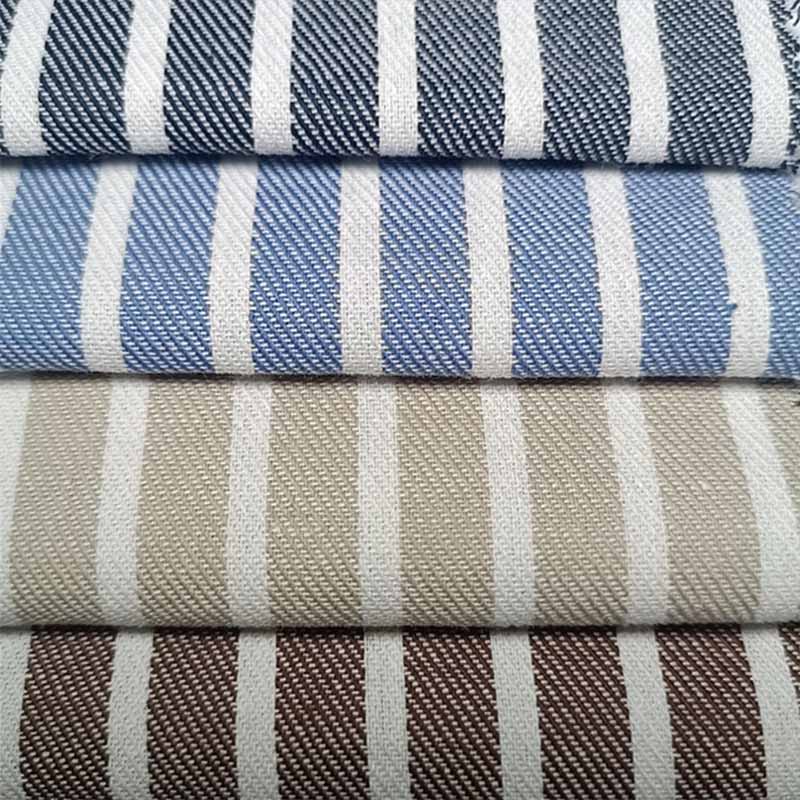
The yarn is made into cotton blend fabrics or pure recycled cotton textiles through knitting or weaving, depending on the end use.
Textile finishing
Fabric then undergoes finishing processes (pre-shrinking, brushing, softening, coating, etc.) to enhance handfeel, durability, and color fastness.
Despite strong potential, recycled cotton presents technical challenges:
Fiber shortening during recycling
Mechanical shredding shortens staple length, which can reduce yarn strength if not carefully engineered.
Maintaining consistent quality
Variations in feedstock color and composition can make it harder to meet strict shade and quality standards batch after batch.
Need for blending
To achieve durable recycled textiles for demanding applications like workwear and upholstery, recycled cotton is often blended with other fibers.
For sustainability managers and procurement teams, the environmental benefits are clear:
Well-developed Recycled Eco-Friendly Cotton Fabric can deliver:
For sourcing managers, merchandisers, and wholesalers, business benefits include:
Due to fiber length and strength considerations, recycled cotton is frequently combined with other fibers to enhance performance:
Typical blends in the recycled textile industry include:
Recycled cotton + polyester
Adds tensile strength, wrinkle resistance, and dimensional stability.
Recycled cotton + spandex
Creates spandex cotton blend fabrics with stretch and comfort for fitted garments.
Recycled cotton + viscose
Delivers softer, more fluid, and drapable fabrics, ideal for fashion items and home textiles.
Recycled cotton + nylon
Provides higher abrasion resistance and strength, suitable for bags and upholstery fabrics.
Blended recycled cotton fabrics can be tailored for specific product categories:
Sportswear
Recycled cotton/spandex or cotton/polyester blends for stretch, quick-dry, and comfort.
Workwear fabrics
Recycled cotton/polyester for durability, color fastness, and shape retention.
Upholstery and home furnishing textiles
Recycled cotton/nylon or cotton/polyester for strength and pilling resistance.
Denim fabrics
Recycled cotton blends for authentic denim look with lower environmental impact.
Home textiles
Recycled cotton/viscose for soft, absorbent towels, bedding, and cushion covers.
| Blend Type | Key Benefit | Typical Applications |
| Recycled Cotton + Polyester | Better durability & wrinkle resistance | Hoodies, uniforms, workwear fabrics |
| Recycled Cotton + Spandex | Stretch and flexibility | Sportswear, leggings, fitted T‑shirts |
| Recycled Cotton + Viscose | Softer texture & improved drape | Fashion apparel, dresses, bedding |
| Recycled Cotton + Nylon | Increased strength & abrasion resistance | Bags, upholstery, industrial textiles |
In recycled cotton for fashion brands, key product lines include:
For recycled cotton for home textiles, common items are:
Recycled cotton is also used in more technical and industrial segments:
Key reasons brands and wholesalers are scaling up recycled cotton programs:
For international buyers, sourcing teams, and compliance departments, textile certifications are non-negotiable:
When evaluating Recycled Eco-Friendly Cotton Fabric, buyers commonly look for:
GRS (Global Recycled Standard)
Confirms recycled fiber content, chain of custody, and social/environmental practices.
OEKO-TEX (e.g., STANDARD 100)
Ensures the fabric is tested for harmful substances and safe for skin contact.
BCI (Better Cotton Initiative) or BCI-aligned programs
While not a recycled standard, it can complement recycled content by improving the share of more responsible cotton in blends.
ISO and other sustainability standards
Quality, environmental management, and social responsibility frameworks that support corporate ESG targets.
Using GRS certified recycled cotton and OEKO-TEX recycled cotton can deliver:
Professional buyers often need flexibility in composition:
Key technical parameters that can be specified:
Typical customization paths:
Lightweight fabrics for fashion
Soft, breathable, and drapable recycled cotton or blends for tops, dresses, and shirts.
Heavy-duty fabrics for workwear
Strong, abrasion-resistant blends for uniforms, trousers, and industrial garments.
Premium soft-touch fabrics for home textiles
High-absorbency and soft handfeel for bedding, towels, and cushions.
To ensure stable quality and on-time delivery, buyers should work with mills experienced in recycled programs:
As a specialized supplier, Ningbo Nashe Textile Co., Ltd. collaborates closely with brands, designers, and wholesalers to develop tailored recycled cotton solutions. For project briefings, sampling, or price inquiries, you are welcome to contact our team and discuss your specific requirements.
The global textile industry is moving rapidly toward circular textile production:
Looking ahead, demand for Recycled Eco-Friendly Cotton Fabric is expected to grow in:
Forward-looking buyers and brands can prepare by:
Recycled Eco-Friendly Cotton Fabric is moving from a niche option to a strategic material in global sourcing. It helps reduce environmental impact, supports circularity, and answers the expectations of increasingly eco-conscious consumers and regulators.
For buyers, designers, and wholesalers, recycled cotton offers a rare combination of environmental, functional, and commercial advantages. With the right blend design and textile finishing, it can deliver soft, breathable, and durable performance across apparel, home textiles, and industrial applications.
To succeed, brands must prioritize certifications, customization, and responsible sourcing, ensuring every fabric not only looks and feels good, but also meets the highest sustainability standards. If you are planning your next season or building long-term recycled fabric programs, you are welcome to contact our team at Ningbo Nashe Textile Co., Ltd. for professional development support and tailored solutions.
It is a cotton-based fabric made from post-consumer textile waste, production scraps, and industrial cotton waste instead of new-grown cotton. The result is a more sustainable cotton fabric that reduces landfill and resource consumption.
Virgin cotton is grown from new crops, requiring land, water, and agrochemicals. Recycled cotton is produced from existing textiles, reducing water use, pesticide dependency, and waste. Properly engineered recycled cotton can reach similar comfort and performance levels to conventional sustainable cotton fabric.
Yes. When the cotton recycling process is carefully controlled and fibers are blended with materials like polyester, viscose, or spandex, recycled cotton can provide durable recycled textiles suitable for workwear fabrics, denim, and everyday apparel.
Key certifications include GRS certified recycled cotton for recycled content and traceability, OEKO-TEX recycled cotton for chemical safety, and BCI-aligned programs or other sustainability standards to support responsible sourcing.
Absolutely. Recycled cotton is often blended with polyester, spandex, viscose, or nylon to improve strength, stretch, wrinkle resistance, and lifespan. Typical products include polyester recycled cotton blend fleece, spandex cotton blend sportswear, and high-strength bag and upholstery fabrics.
Key users are fashion brands, sportswear labels, home textile manufacturers, and industrial buyers of workwear, canvas bags, and cleaning textiles. Demand is particularly strong in markets with advanced sustainability regulations.
Pricing depends on composition, yarn count, weave structure, finishing, and certification level. In many cases, certified recycled cotton can be slightly higher in cost than basic conventional cotton, but it offers strong added value through sustainability positioning and market access.
Fashion brands are under pressure to lower their environmental footprint, meet textile sustainability trends, and satisfy eco-conscious consumers. Using Recycled Eco-Friendly Cotton Fabric helps them reduce impact, strengthen their green image, and comply with retailer and regulatory requirements while maintaining product performance.