Nashe Textile's new fabric is engineered with the following specifications, carefully calibrated for both design versatility and wearing performance:
| Specification | Details |
|---|---|
| Composition | 95% Polyester + 5% Spandex |
| Construction | Woven, Double Layer |
| Yarn Count | 75D |
| Weight | Medium Weight |
| Stretch | 4-Way Stretch with High Recovery |
| Features | Excellent Drape, Wear-Resistant, Anti-Pilling |
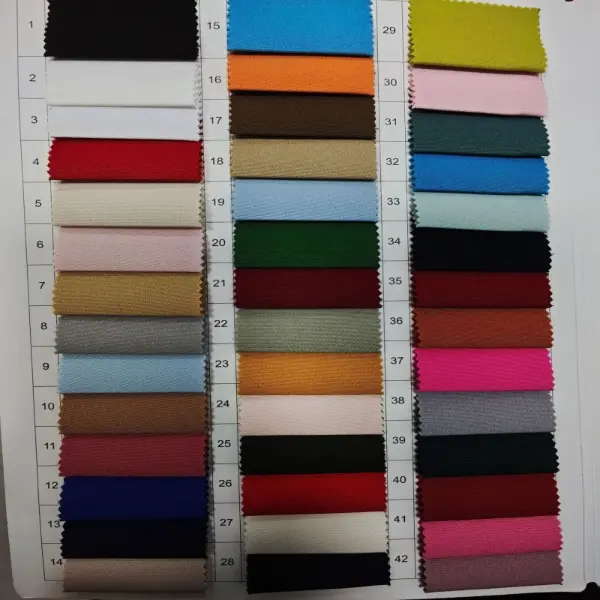
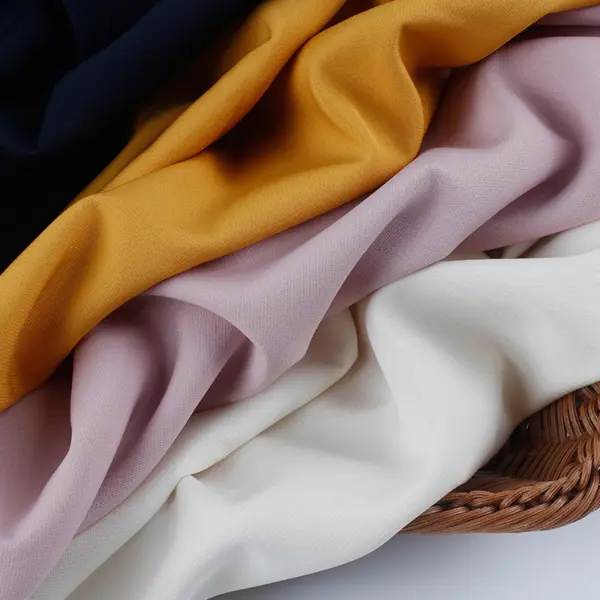
| Color Options | Solid Colors |
| Width | 150cm (standard) |
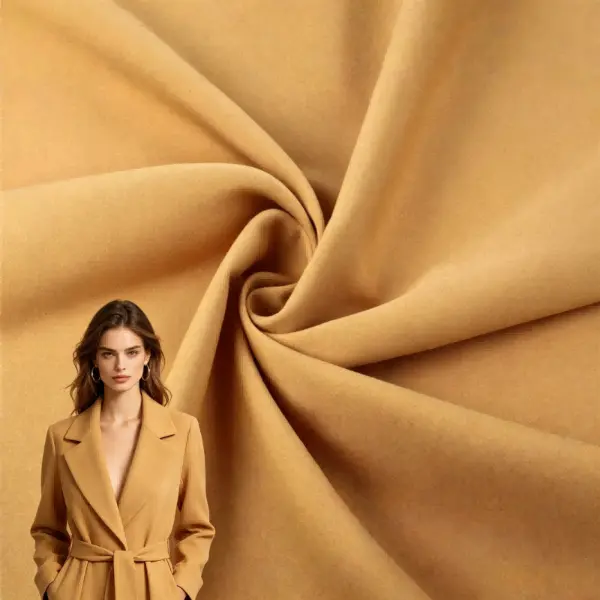
| Hand Feel | Soft, Fluid, Drapey |
| End Uses | Dresses, Suits, Cheongsams, Jackets, Loungewear |
The 95% polyester component ensures dimensional stability and wrinkle resistance, while the 5% spandex delivers dynamic stretch and shape retention. The double-layer woven construction provides a fuller body and opacity without adding unnecessary weight, making it suitable for year-round collections.
To clearly demonstrate the advantages of this new fabric, here is a side-by-side comparison with conventional single-layer stretch woven fabrics available in the market:
| Comparison Criteria | Nashe Double Layer Draped 4-Way Stretch (New) | Traditional Single-Layer Stretch Fabric |
|---|---|---|
| Structural Stability | Double-layer weave delivers crisp body and shape retention, resistant to deformation | Single-layer structure tends to wrinkle and lose shape after prolonged wear or hanging |
| Drape Performance | Excellent – natural gravity-driven drape creates smooth, flowing lines | Average or poor – often light, clingy, and lacking silhouette definition |
| Anti-Pilling & Abrasion Resistance | Superior – polyester outer layer provides strong protection against wear and fuzzing | Moderate – high-elastic single-layer fabrics are prone to pilling |
| Shape Retention (Recovery Rate) | High Recovery – quickly returns to original shape after repeated stretching | Average recovery – prone to bagging at elbows, knees, and other high-movement areas |
| Hand Feel & Wearing Experience | Soft with a fluid hand, balancing comfort and structured support | Often either too limp or too stiff, struggling to combine comfort with silhouette |
| Application Versatility | Covers formal wear, office suits, Cheongsam, light jackets, and loungewear – wide range | Mostly limited to sportswear or basic inner layers |
What sets Nashe Textile's double-layer construction apart is not simply stacking two layers, but precise control of warp/weft tension and interlayer binding technology. This solves the long-standing industry challenge where "high stretch often means soft and shapeless," allowing designers to create fitted silhouettes without compromising on comfort.
For buyers, pattern makers, and end consumers alike, a fabric's real value lies not only in its initial look but also in its everyday usability and care convenience. Below is a practical guide tailored to Nashe Textile's Double Layer Draped 4-Way Stretch Fabric.
Cutting Advice: Due to the 4-way stretch property, lay the fabric flat naturally without over-stretching during cutting. Over-stretching will cause cut pieces to shrink back, resulting in size deviations. Cut in the same direction (nap) to minimize color shading between panels.
Needle & Stitch Density: Use size 9–11 ballpoint needles with a stitch density of 12–14 stitches per 3cm (approx. 1.2 inches). Too many stitches per inch will cut through the spandex fibers, causing wavy seams; too few stitches will result in seam breakage under tension. Pair with high-elastic polyester thread to match the fabric's stretch capacity.
Ironing Temperature: The double-layer structure offers better heat resistance than single-layer stretch fabrics. Set the iron to 150°C–160°C (medium heat) and always iron on the reverse side, or place a white cotton cloth between the iron and the fabric surface. Direct high heat on the face side may cause shine marks (glazing) or damage the interlayer bonding points.
Washing Method: Strongly recommended to machine wash gently or hand wash in cold water (below 30°C / 86°F). Washing in hot water (above 40°C / 104°F) accelerates spandex aging and causes loss of elasticity. Do not use chlorine-based bleach – it breaks down the polyester molecular structure, leading to yellowing and stiffening.
Spinning & Drying: Avoid high-speed spin-drying or vigorous wringing, as centrifugal force may cause irreversible shifting between the two fabric layers. Use the delicate spin cycle (max 600 RPM) , then smooth out the garment and hang to dry in a shaded, well-ventilated area.
No Direct Sunlight: UV rays are the enemy of elastic fibers. Prolonged direct sunlight will embrittle spandex, diminishing the fabric's high recovery property. If outdoor drying is unavoidable, turn the garment inside out to minimize direct UV exposure on the face side.
Prevent Bagging from Prolonged Sitting: Despite its high recovery rate, it is advisable not to wear the same garment on consecutive days. Allowing 24 hours of "rest time" between wears gives the spandex fibers sufficient opportunity to fully retract, significantly extending the garment's crisp, tailored appearance.
Proper Storage: When storing between seasons, use broad-shouldered hangers to hang the garment, avoiding folding that may create permanent creases between the double layers. If folding is necessary, place a layer of acid-free tissue paper along the fold lines to minimize pressure marks.
By following these cutting, sewing, washing, and care practices, both brands during sample-making and consumers in daily wear can fully maximize the performance of this Double Layer Draped 4-Way Stretch Fabric – enjoying high-stretch comfort while maintaining a crisp, flowing silhouette that lasts.