News

PET Mesh Fabric Is Finding More Uses Beyond Traditional Textile Applications

2026-08-21 0 Leave me a message

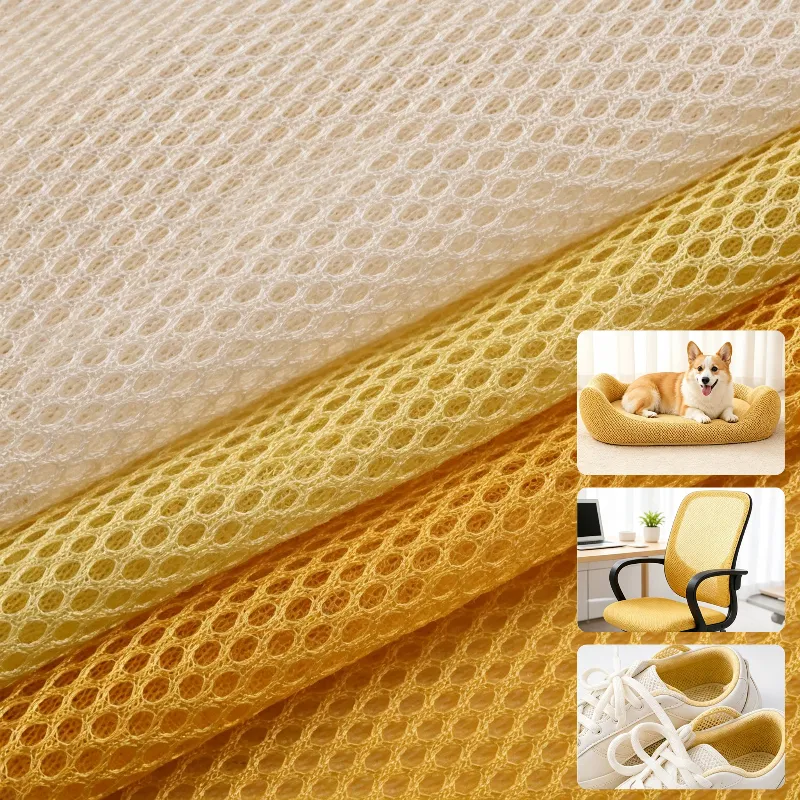
PET Mesh Fabric used to be associated mainly with sportswear, lining materials, and simple mesh panels. Today, it can be found in a much wider range of products, including pet carriers, backpacks, storage bags, office chairs, shoes, and sports accessories.

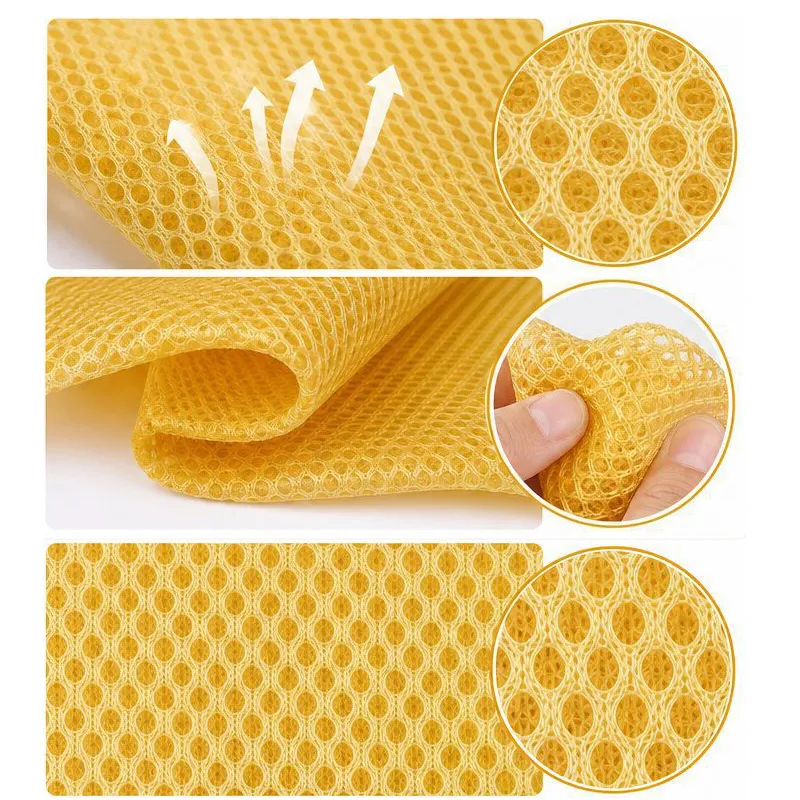
The reason is fairly straightforward. Many products need a material that allows air to pass through without adding too much weight. In some cases, the material also needs to provide a certain amount of support or allow people to see what is inside. Mesh fabric can meet several of these requirements at the same time, which makes it useful in product designs where a solid fabric would be less practical.

Where Is PET Mesh Fabric Being Used?

The interesting part is that most of these applications are already around us. You may not notice the fabric itself, but you can usually see why a manufacturer chose mesh for a particular part of the product.

Application Why Mesh Is Used
Pet carriers Ventilation and visibility
Pet beds Air circulation and support
Backpacks Lightweight construction and ventilation
Storage bags Visibility and airflow
Office chairs Breathability and support
Shoe uppers Airflow and lightweight design
Sports products Ventilation and flexible construction

The material does not necessarily replace the main fabric of a product. More often, it is used only where its properties are useful.

Pet Products Are One of the Most Obvious Examples

Take a pet carrier as an example. A carrier needs to provide enough structure to protect the animal, but it also needs ventilation. If all of the side panels are made from solid fabric, air circulation inside the carrier can become limited.

That is why mesh is often placed on the sides, top, or other ventilation areas. The owner can also see the pet without opening the carrier, which is useful during travel or transportation.

Pet beds and cushions have a similar requirement. A mesh surface can help air move through the product while providing a structured layer for the cushion. The exact fabric still depends on the construction of the finished product, but the basic reason for using mesh is easy to understand: the product needs some airflow without becoming completely open or unsupported.

A Simple Example

Imagine two pet carriers of the same size.

Carrier A: mostly solid fabric.

Carrier B: solid fabric combined with mesh ventilation panels.

The second design gives the manufacturer another way to manage airflow without making the entire carrier from mesh. This type of material combination is common in practical product design.


Backpacks and Storage Bags Need Something Different

Mesh is also useful when visibility matters.

A backpack side pocket, for example, does not always need to completely hide its contents. When a water bottle or small item is stored there, being able to see it can actually make the product easier to use.

Travel organizers work in much the same way. A mesh compartment allows users to identify the contents without opening every pocket.

This is particularly useful for:

  • Travel organizers
  • Cosmetic bags
  • Toiletry pouches
  • Tool bags
  • Backpack side pockets
  • Luggage compartments

For these products, the appeal of mesh is not just breathability. Visibility is often just as important.


What About Office Chairs?

Office furniture is another everyday example.

Many office chairs use mesh on the backrest because people may sit in the same position for several hours. A completely closed fabric surface can feel warm, particularly in a warm office or during long periods of sitting.

A mesh back allows more air movement between the user's back and the chair.

However, chair mesh has a different job from mesh used in a storage bag. It needs to work with the frame of the chair and maintain its shape under repeated pressure.

This is why manufacturers usually look at more than just the material name when selecting a mesh fabric. Fabric structure, weight, strength, elasticity, and dimensional stability can all matter depending on the finished product.


PET Mesh Fabric vs. Solid Fabric

A simple comparison helps explain why manufacturers sometimes choose mesh instead of conventional fabric.

Factor PET Mesh Fabric Solid Fabric
Airflow Generally higher Depends on fabric structure
Visibility Possible through mesh openings Usually limited
Weight Can be lightweight Varies by material
Structure Depends on mesh construction Usually more continuous
Typical Use Ventilation panels, pockets, inserts Main panels, covers, liners
Product Design Useful for open or ventilated sections Useful where coverage is needed

This does not mean mesh is automatically better.

A suitcase, backpack, or pet carrier may actually need both materials. Solid fabric can provide coverage and protection, while mesh can be added where ventilation or visibility is needed.


Why the Mesh Structure Matters

Not all PET Mesh Fabric performs in exactly the same way.

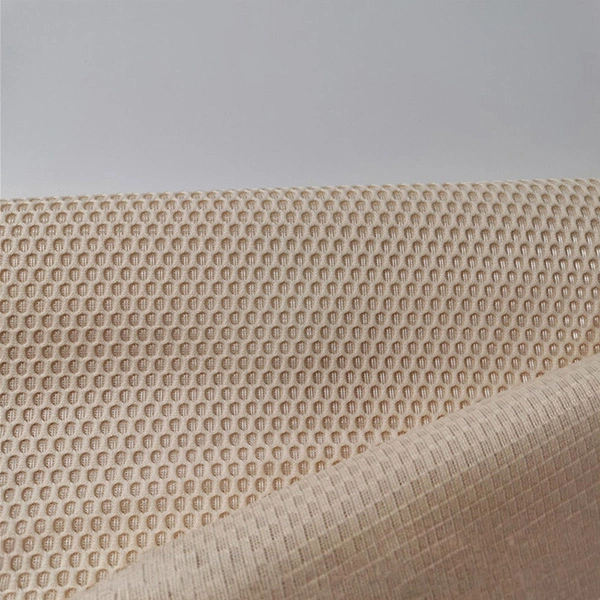
Two fabrics may both be described as PET mesh but have very different results once they are made into a finished product. The difference can come from the yarn, mesh opening, fabric weight, knitting structure, thickness, and finishing process.

For example, a larger mesh opening may provide more airflow but less coverage. A denser structure may provide better coverage but reduce airflow.

The same applies to fabric weight. A lightweight mesh can be useful when reducing the overall weight of a bag is important, while a heavier construction may be considered when the finished product needs more support.

When Choosing a Mesh Fabric, Manufacturers Usually Need to Look At:

Mesh Opening
Affects airflow, visibility, and overall appearance.

Fabric Weight
Influences the finished product's weight and hand feel.

Yarn Specification
Can affect strength and fabric construction.

Knitting Structure
Influences stability, stretch, and how the fabric behaves during processing.

Finishing
May affect the appearance and suitability for specific applications.


One Mesh Fabric Does Not Fit Every Product

This is where material selection becomes more practical.

A mesh fabric used for a cosmetic pouch does not necessarily need the same characteristics as one used for an office chair. A pet carrier may need a different balance again.

Product Main Considerations
Cosmetic Pouch Visibility, appearance, lightweight feel
Pet Carrier Airflow, visibility, durability
Backpack Weight, strength, ventilation
Office Chair Support, stability, breathability
Shoe Upper Flexibility, airflow, abrasion resistance
Tool Bag Strength, wear resistance, structure

So when a manufacturer is sourcing PET Mesh Fabric, the better question is not simply “Which PET mesh is the best?”

It is:

“Which mesh structure fits the way this product will actually be used?”


PET Mesh Fabric Is Becoming More of a Functional Material

The wider use of PET Mesh Fabric does not come from one particular industry trend. It is more closely related to how everyday products are being designed.

Manufacturers are often trying to reduce unnecessary material, improve ventilation, make products easier to use, or add functional sections without significantly increasing weight. Mesh can help with these requirements when it is used in the right place.

That is why it keeps appearing in products that seem unrelated at first glance. A pet carrier, office chair, travel organizer, and sports shoe have very different purposes, but they can all benefit from a material that combines an open structure with reasonable strength and flexibility.

The Practical Takeaway

PET Mesh Fabric is not a replacement for every conventional textile.

Instead, it works best where a product needs airflow, lower weight, visibility, or a combination of these features. The final performance still depends heavily on the particular mesh structure and specification.

Related News
Leave me a message
X
We use cookies to offer you a better browsing experience, analyze site traffic and personalize content. By using this site, you agree to our use of cookies.Privacy Policy
RejectAccept