News

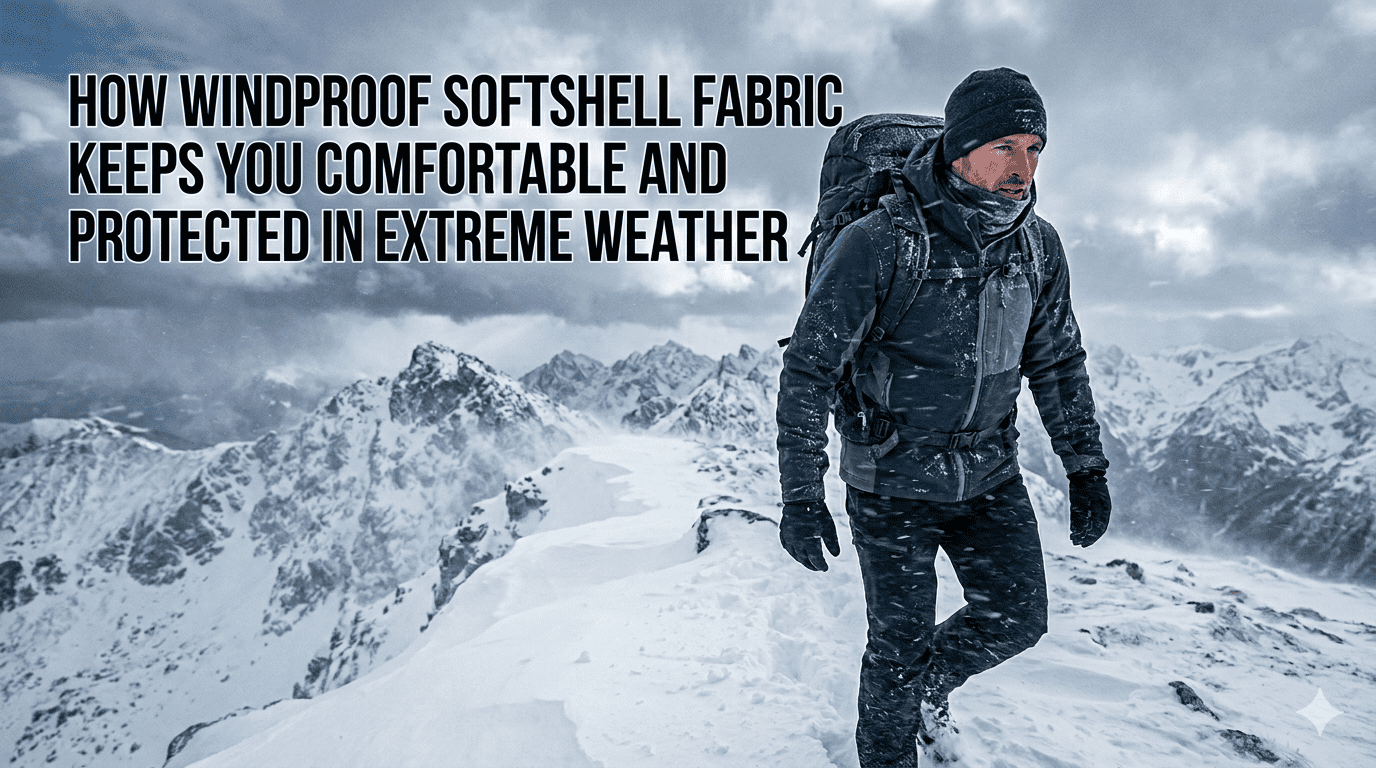
How Windproof Softshell Fabric Keeps You Comfortable and Protected in Extreme Weather

2026-05-04 0 Leave me a message

Table of Contents

  1. Introduction
  2. What is Windproof Softshell Fabric?
  3. Key Benefits of Windproof Softshell Fabric
  4. How Windproof Softshell Fabric Stands Out in Extreme Weather Conditions
  5. Applications of Windproof Softshell Fabric
  6. Comparing Windproof Softshell Fabric with Other Fabrics
  7. Care and Maintenance of Windproof Softshell Fabric
  8. Conclusion
  9. Frequently Asked Questions (FAQs)

1. Introduction

The global outdoor apparel market has grown dramatically over the past decade, driven by a surge in adventure travel, high-altitude sports, and increased consumer demand for performance-grade clothing that transitions seamlessly from the trail to the city street. As weather patterns become more unpredictable and consumers more discerning, the fabric behind the garment matters more than ever.

For buyers sourcing performance wear, designers engineering technical garments, and wholesalers building competitive product lines, one material consistently rises to the top of the conversation: windproof softshell fabric. It strikes a balance that few materials can — offering serious weather protection without sacrificing the comfort and mobility that active wearers demand.

This article provides a comprehensive, technical, and practical guide to windproof softshell fabric. We cover its construction and layering system, performance benefits, real-world applications, how it compares to competing materials, and how to care for it properly. Whether you are evaluating it as a sourcing decision or designing your next season’s collection, everything you need is here.For fabric sourcing, technical support, or bulk order inquiries, please contact our team at Ningbo Nashe Textile Co., Ltd.


2. What is Windproof Softshell Fabric?

2.1 Composition and Structure

Windproof softshell fabric is a high-performance textile engineered through a multi-layer bonding process that combines distinct materials into a unified, functional structure. Unlike single-layer fabrics that perform one job well and others poorly, softshell construction is built on synergy — each layer compensating for the limitations of the others.

The three primary layers are:

Outer Layer — Windproof Shell The outermost surface is typically constructed from a tightly woven or mechanically treated polyester or nylon. This layer acts as the primary defense against wind penetration, using an extremely dense weave or a Durable Water Repellent (DWR) coating to prevent cold air from passing through. Some premium variants incorporate a windproof membrane laminated directly beneath the outer face fabric for enhanced barrier performance.

Middle Layer — Insulation or Membrane Depending on the intended use and climate rating of the garment, the middle layer may be a thin fleece batting, a breathable polyurethane (PU) membrane, or a stretch-bonded composite. This layer is responsible for thermal retention and serves as the primary moisture-vapor transfer zone — allowing perspiration to move outward while blocking inward moisture.

Inner Layer — Comfort Backing The innermost layer sits directly against the skin and is designed for tactile softness and next-to-skin comfort. Common constructions include brushed tricot, micro-fleece, or a soft jersey knit. This layer also contributes to the fabric’s overall stretch and recovery, enabling unrestricted movement.

2.2 Layers and Their Functions

The power of windproof softshell fabric lies not in any single layer but in how these three layers function as an integrated system. The outer layer deflects wind and repels surface moisture. The middle membrane or insulation transfers body heat outward in a controlled manner, preventing the buildup of condensation. The inner backing wicks perspiration away from the skin and maintains thermal comfort even during high-intensity activity.

When bonded correctly — either through lamination or quilting — these layers move as one, eliminating the bunching and shifting that can occur in layered garment systems. The result is a fabric that feels like a single, lightweight, flexible piece of material while performing with the complexity of a full layering system.


3. Key Benefits of Windproof Softshell Fabric

3.1 Wind Protection

Wind chill is one of the most significant factors in outdoor comfort and safety. A 10°C day with 40 km/h winds can feel closer to 0°C on exposed skin, rapidly accelerating heat loss. Windproof softshell fabric is engineered to interrupt this effect entirely.

The tightly woven outer face — often rated to block winds of 60 km/h or more — prevents cold air from penetrating the fabric structure. Unlike loosely constructed fleece or woven wool, which allow wind to pass through fiber gaps, softshell’s dense construction acts as a near-impenetrable barrier. In independent testing, quality softshell fabrics consistently achieve wind resistance ratings below 1 CFM (cubic feet per minute of air permeability), compared to 30–80 CFM for standard mid-layer fleece.

For buyers and wholesalers, this means a softshell jacket can functionally replace both a mid-layer and a light shell in many conditions — a meaningful advantage when building streamlined product lines or pitching simplified layering systems to retail customers.

3.2 Comfort and Flexibility

One of the most commercially significant attributes of windshell softshell fabric is its stretch performance. Traditional windproof materials — coated nylons, treated canvas, older-generation shells — are notoriously rigid, restricting arm swing, hip flexion, and trunk rotation. Softshell fabrics incorporate elastane (typically 5–12% by weight) or bi-stretch woven constructions that provide four-way stretch with excellent recovery.

This elasticity translates directly into garment fit and freedom of movement. A softshell jacket moves with the body rather than against it, making it the preferred choice for high-mobility activities like climbing, skiing, and cycling. From a design perspective, it also allows for more tailored, athletic silhouettes that are difficult to achieve in stiffer technical fabrics.

The inner brushed layer adds a perception of warmth and softness that rigid shells cannot replicate, making softshell garments genuinely comfortable to wear against bare skin — a meaningful consideration for everyday use and shoulder-season applications.

3.3 Durability and Performance

Windproof softshell fabric is constructed for prolonged, demanding use. The face fabrics used in quality softshell textiles typically achieve abrasion resistance ratings of 20,000–50,000 rub cycles on the Martindale scale, making them highly resistant to the wear caused by backpack straps, harnesses, and contact with rock or brush.

The DWR coatings applied to the outer surface are wash-durable, though they do require periodic refreshing. The bonded construction resists delamination in quality-grade fabrics, maintaining structural integrity through hundreds of wash-and-wear cycles. For wholesalers and procurement teams, this durability profile translates into lower return rates and stronger long-term product reputation.


4. How Windproof Softshell Fabric Stands Out in Extreme Weather Conditions

4.1 Breathability and Temperature Regulation

Breathability — measured in MVTR (Moisture Vapor Transmission Rate), expressed in grams per square meter per 24 hours (g/m²/24h) — determines how efficiently a fabric allows body-generated moisture vapor to escape. For windproof softshell fabrics, MVTR ratings typically range from 5,000 to 15,000 g/m²/24h, depending on construction quality and membrane type.

This level of breathability means that during aerobic activities — uphill hiking, cross-country skiing, trail running — the fabric actively vents perspiration vapor outward, preventing the internal condensation that makes garments clammy and cold. Temperature regulation is achieved passively, without vents or zippers, simply through the vapor-permeable nature of the membrane.

In extreme cold, the insulating middle layer retains enough body heat to maintain comfort during low-activity phases (rest stops, belays, lift rides), while the breathable system prevents overheating during exertion. This dual performance across activity intensities is a key differentiator from both insulated hard-shells and non-insulated wind shells.

4.2 Moisture Management

Beyond breathability, windproof softshell fabric manages moisture at two distinct points: externally via DWR repellency, and internally via moisture-wicking inner construction.

On the exterior, DWR-treated face fabrics cause water to bead and roll off rather than saturating the fabric — a phenomenon called “beading.” This is critical because saturated face fabrics lose their thermal efficiency and feel cold and heavy against the body. Standard DWR treatments maintain effective repellency for 30–50 wash cycles before requiring reactivation.

On the interior, the brushed or moisture-wicking inner layer pulls perspiration away from the skin through capillary action, distributing it across a broader surface area for faster evaporative drying. This keeps the microclimate between skin and fabric consistently dry and thermally stable, regardless of external conditions or activity output.

4.3 Water-Resistance and UV Protection

Windproof softshell fabrics are water-resistant rather than fully waterproof — an important distinction for buyers and specifiers. They perform well in light rain and brief downpours (typically rated to 1,000–5,000 mm hydrostatic head), but are not intended to replace a waterproof hard-shell in sustained, heavy rain environments.

This characteristic is actually a feature for most use cases: the DWR surface repels unexpected rain, morning dew, and snow effectively, while the breathable construction prevents the internal moisture buildup that fully seam-sealed waterproof membranes often create during high-output activities.

Additionally, many windproof softshell fabrics incorporate UPF (Ultraviolet Protection Factor) ratings of 30–50+, blocking a substantial percentage of UV-A and UV-B radiation. For users at high altitude, on glaciers, or in open desert environments where UV exposure is amplified, this protection is a meaningful health benefit that should be highlighted in product marketing and specifications.


5. Applications of Windproof Softshell Fabric

5.1 Outdoor Sports and Adventure Activities

Windproof softshell fabric has become the fabric of choice across a wide range of performance sports and adventure activities:

Alpine Hiking and Mountaineering: The combination of wind protection, stretch, and breathability makes softshell jackets and pants ideal for everything from day hikes to multi-day alpine ascents. The fabric’s durability holds up against pack straps and scrambling contact with rock.

Skiing and Snowboarding: Softshell ski pants and jackets are prized for their trim silhouette, four-way stretch for carving movements, and resistance to wind and surface snow. They are particularly popular among backcountry and touring skiers who generate high body heat during ascents.

Cycling: Cyclists deal with intense wind exposure at speed combined with high aerobic output — a combination that demands windproofing without compromising breathability. Softshell cycling jackets and bib tights have largely replaced traditional nylon cycling shells in the performance market.

Climbing: Rock and ice climbers need garments that move with the body without restriction. Softshell climbing pants and jackets are engineered with articulated patterning and stretch fabrics that accommodate extreme range of motion while protecting against wind and light precipitation.

Trail Running: Lightweight softshell vests and jackets serve trail runners who need wind protection during exposed ridge runs without adding the bulk or weight of traditional shells.

5.2 Workwear and High-Performance Gear

Beyond recreational sports, windproof softshell fabric has found strong adoption in professional and industrial workwear:

Military and Tactical Gear: Armed forces and law enforcement agencies use softshell jackets and pants for field operations requiring quiet, flexible, and weather-resistant outerwear that doesn’t impede movement or weapon handling.

Construction and Utilities: Outdoor workers in wind-exposed environments — linemen, construction crews, survey teams — benefit from softshell’s combination of durability, warmth, and unimpeded mobility during technical tasks.

Search and Rescue: SAR teams require garments that perform across a wide range of conditions and activities — from high-exertion rescues to stationary coordination work in cold environments. Softshell’s versatility makes it a standard specification in many SAR equipment lists.

Guide and Instructor Gear: Mountain guides, ski instructors, and outdoor educators who work long days in variable conditions consistently prefer softshell for its all-day comfort and reliable performance without the need for layer changes.

5.3 Everyday Use in Challenging Environments

Windproof softshell fabric has also made significant inroads in lifestyle and everyday outerwear — particularly in markets with cold, windy climates such as Scandinavia, Canada, the Pacific Northwest, and high-altitude urban centers.

Consumers in these regions demand jackets that can handle a morning commute in blustering wind and a lunchtime walk without requiring a wardrobe change. Softshell’s smart, streamlined silhouette — free from the puffiness of insulated jackets or the rustling of hard-shells — gives it a versatility that resonates with urban consumers who also spend time outdoors.

For designers and wholesalers targeting lifestyle channels, windproof softshell presents a strong value proposition: a single garment that covers the full spectrum from outdoor adventure to daily wear without visual or functional compromise.


6. Comparing Windproof Softshell Fabric with Other Fabrics

6.1 Softshell vs. Hard-Shell Fabric

Characteristic Windproof Softshell Hard-Shell
Weight Light to medium (200–450 g/m²) Light to medium (150–400 g/m²)
Flexibility / Stretch Excellent (4-way stretch) Limited to moderate
Breathability (MVTR) 5,000–15,000 g/m²/24h 10,000–30,000 g/m²/24h
Waterproofing Water-resistant (1,000–5,000 mm) Fully waterproof (10,000–28,000 mm+)
Wind Resistance Excellent Excellent
Comfort / Hand-feel Soft, warm, skin-friendly Smooth, often crinkly or stiff
Packability Moderate High
Noise Silent Moderate to high (rustling)
Ideal Conditions Variable weather, high-activity Sustained heavy rain, storm use
Typical Price Point Mid to premium Mid to premium

Key Takeaway: Hard-shells excel in sustained, heavy precipitation. Softshells excel in high-activity, variable conditions where comfort and mobility are priorities.

6.2 Softshell vs. Traditional Windproof Materials

Characteristic Windproof Softshell Traditional Windproof (Coated Polyester / Windproof Fleece)
Wind Resistance Excellent Good to excellent (varies)
Stretch / Mobility Excellent Poor to moderate
Breathability Good to excellent Poor to moderate
Moisture Management Integrated wicking system Limited
Softness / Comfort High Low to moderate
Abrasion Resistance High Moderate
Weight Light to medium Medium to heavy
Garment Construction Single unified fabric Often requires additional lining
Wash Durability High Moderate (coating degrades faster)
Versatility Very high Limited

Key Takeaway: Traditional windproof materials may cost less at the raw material level, but softshell delivers superior performance across nearly every metric that matters to the end user — a key argument for buyers and wholesalers justifying a higher price point.


7. Care and Maintenance of Windproof Softshell Fabric

7.1 Cleaning Instructions

Proper care is essential to maintaining the performance properties of windproof softshell fabric — particularly the DWR coating, which can be compromised by incorrect washing.

Step 1 — Pre-Treatment Before washing, close all zippers and fasten all hook-and-loop (Velcro) closures to prevent snagging the face fabric. Spot-treat any heavily soiled areas with a soft brush and a small amount of technical fabric cleaner.

Step 2 — Machine Wash Settings Wash on a gentle or delicate cycle using cold or warm water (30°C/86°F maximum). Use a liquid technical fabric wash specifically formulated for performance outerwear (such as Nikwax Tech Wash or Grangers Performance Wash). Avoid powder detergents, fabric softeners, bleach, and dryer sheets — these residues coat the fabric fibers and drastically reduce breathability and DWR effectiveness.

Step 3 — Rinsing Run an extra rinse cycle to ensure all detergent residue is fully removed from the fabric structure.

Step 4 — Drying Tumble dry on low heat or lay flat to air dry. A low-heat tumble dry cycle (20–30 minutes) actually helps reactivate the DWR coating by gently warming the face fabric. Do not iron directly; if ironing is needed, place a clean cloth between the iron and the garment and use the lowest heat setting.

Step 5 — DWR Reactivation If water no longer beads on the surface after washing, the DWR coating may need refreshing. Apply a wash-in DWR treatment (Nikwax TX.Direct or equivalent) or use a spray-on DWR product after washing. Follow product instructions carefully.

7.2 Longevity Tips

Storage: Store softshell garments loosely folded or hung — never compressed in a stuff sack for extended periods, as prolonged compression degrades the insulating middle layer and can cause delamination in bonded fabrics.

DWR Maintenance: Reapply DWR treatment every 10–15 washes, or whenever water no longer beads effectively on the surface. This single maintenance step has the greatest impact on long-term performance.

Repair Small Damages Promptly: Small tears or punctures in the face fabric should be repaired immediately using adhesive fabric repair tape or a field repair kit. Unrepaired damage allows delamination and moisture ingress to expand rapidly.

Avoid Prolonged UV Exposure When Not In Use: While the fabric offers UV protection in wear, extended storage in direct sunlight (e.g., in a car window) can degrade DWR coatings and fade face fabrics over time.

Wash Regularly: Counterintuitively, regular washing (every 5–10 uses) maintains DWR performance better than infrequent washing. Body oils, sunscreen, and dirt are the primary enemies of DWR coating effectiveness.


8. Conclusion

Windproof softshell fabric represents one of the most significant advances in technical textile engineering of the past two decades. By integrating wind protection, controlled breathability, moisture management, four-way stretch, and tactile comfort into a single unified material, it addresses the full spectrum of demands placed on performance outerwear in a way no predecessor material has managed to do as comprehensively.

For outdoor enthusiasts, it means a single jacket that performs from the parking lot to the summit and back, without the bulk, noise, or restriction of traditional technical outerwear. For professionals working in exposed environments, it means all-day comfort and protection that doesn’t interfere with the physical demands of the job. For everyday wearers in challenging climates, it means stylish, capable outerwear that doesn’t ask them to compromise between function and aesthetics.

For buyers, designers, and wholesalers, windproof softshell fabric represents a product category with strong, durable consumer demand, broad application versatility, and a defensible premium price point grounded in genuine performance value. Brands and retailers that invest in quality softshell product lines — and communicate the technical advantages clearly — consistently see strong sell-through and high customer satisfaction.

As fabric technology continues to advance, we are seeing the emergence of recycled-fiber softshells, bio-based DWR treatments, and next-generation stretch membranes that offer even higher performance at lower environmental cost. The category is evolving — but the core principles that make windproof softshell fabric exceptional remain constant: intelligent layering, uncompromising comfort, and reliable protection when conditions demand it most.

If you are looking for windproof softshell fabric sourcing, customization, or OEM/ODM development, please contact our team at Ningbo Nashe Textile Co., Ltd. We provide professional textile solutions for global buyers, brands, and wholesalers.


9. Frequently Asked Questions (FAQs)

Q1: What is the difference between windproof softshell and hard-shell fabric?

The primary difference lies in waterproofing level, flexibility, and comfort. Hard-shell fabrics use fully seam-sealed, waterproof membranes (rated 10,000 mm hydrostatic head or higher) designed for sustained heavy rain and storm conditions. Windproof softshell fabrics are water-resistant rather than waterproof, but offer significantly greater stretch, softer hand-feel, and higher breathability during aerobic activity. Softshell is the better choice for high-output activities in variable weather; hard-shell is the better choice when staying dry in prolonged, heavy rain is the primary requirement.

Q2: Can windproof softshell fabric be used for all outdoor activities?

Windproof softshell is highly versatile and suitable for the vast majority of outdoor activities — hiking, skiing, cycling, climbing, trail running, and more. Its primary limitation is in sustained, heavy precipitation, where a fully waterproof hard-shell is more appropriate. For activities that involve high aerobic output, significant range of motion, or mixed weather conditions, softshell typically outperforms any alternative on the market.

Q3: How durable is windproof softshell fabric in harsh weather conditions?

Quality windproof softshell fabrics are engineered for demanding, long-term use. Abrasion resistance ratings of 20,000–50,000 rub cycles (Martindale) mean the face fabric withstands years of contact with backpack straps, harnesses, and rough terrain. The bonded construction resists delamination through hundreds of wash cycles when properly maintained. Cold, wind, and UV exposure do not meaningfully degrade structural integrity with routine care and DWR maintenance.

Q4: Does windproof softshell fabric provide UV protection?

Yes. Most windproof softshell fabrics provide meaningful UV protection, with many achieving UPF 30–50+ ratings. The dense woven face fabric physically blocks a high proportion of UV-A and UV-B radiation. This makes softshell garments a practical choice for high-altitude, glacial, and desert environments where UV exposure is significantly elevated compared to sea-level conditions.

Q5: Can I machine wash my windproof softshell clothing?

Yes, with appropriate care. Use a gentle or delicate cycle with cold or warm water (maximum 30°C), and a liquid technical fabric wash free of softeners, bleach, and brighteners. Close all zippers before washing, run an extra rinse cycle, and follow with a low-heat tumble dry to reactivate the DWR coating. Reapply a wash-in or spray-on DWR treatment periodically — approximately every 10–15 washes — to maintain water-beading performance. Avoid standard laundry detergents and fabric softeners, as these are the most common cause of premature performance degradation in softshell garments.


For more technical specifications or wholesale inquiries, contact our team at Ningbo Nashe Textile Co., Ltd.

Related News
Leave me a message
X
We use cookies to offer you a better browsing experience, analyze site traffic and personalize content. By using this site, you agree to our use of cookies. Privacy Policy
Reject Accept