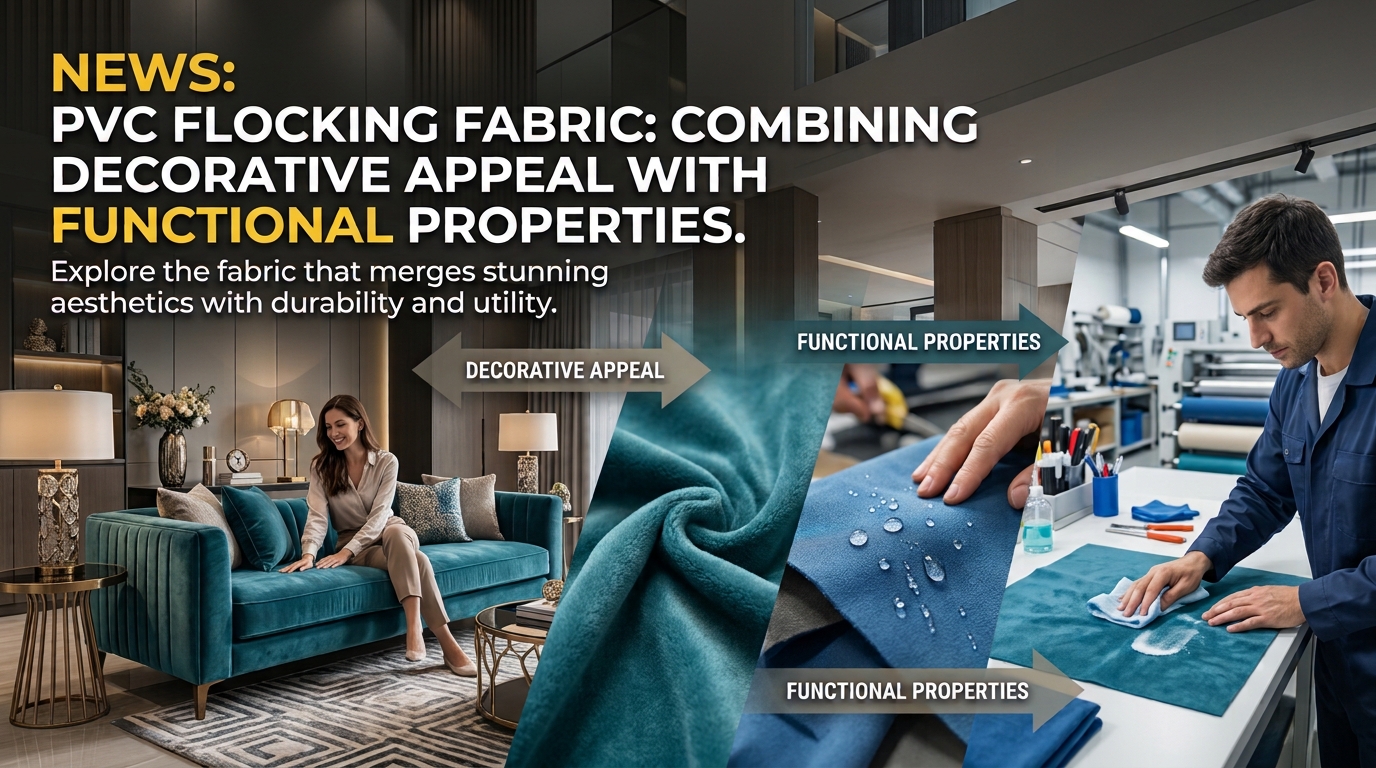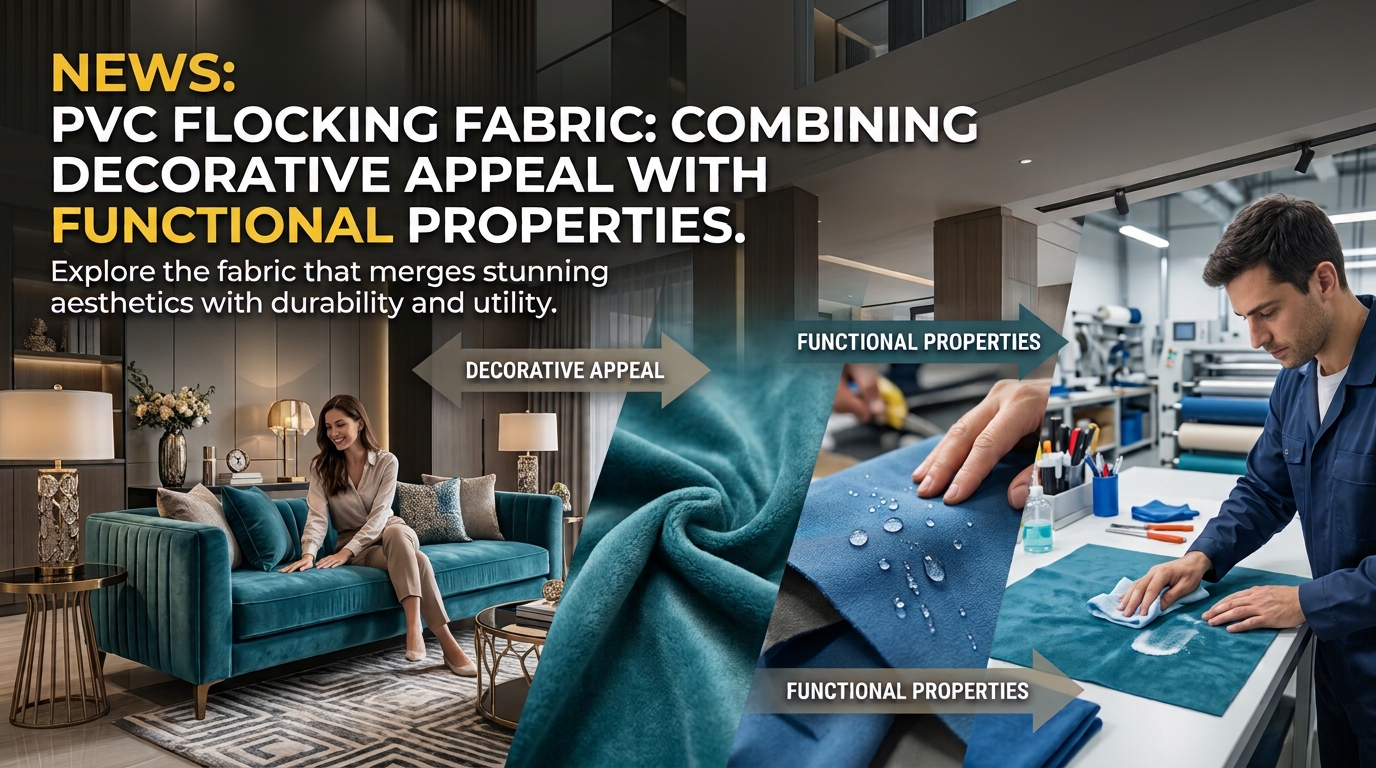
PVC Flocking Fabric combines the practical characteristics of a polyvinyl chloride (PVC) base with the soft, decorative appearance of a flocked fiber surface. This combination makes it suitable for products that require both attractive finishes and functional material properties. Flocking technology transforms an ordinary PVC surface into a soft, velvet-like or suede-like finish by electrostatically applying short fibers that stand upright on an adhesive layer. The result is a material that delivers visual appeal, tactile softness, flexibility, and practical performance in one construction. Buyers, designers, and wholesalers encounter PVC flocking fabric in furniture coverings, automotive interior components, home accessories, packaging inserts, display products, and decorative consumer goods. Understanding its layered construction, manufacturing process, fiber options, and performance characteristics enables more informed material selection and reduces the risk of mismatches between specification and end-use requirements.
The material rests on three primary components. The PVC base supplies the foundation, determining flexibility, thickness, structural support, and overall handling characteristics. An adhesive layer bonds the flocking fibers securely to this base. The flocking fibers themselves create the soft texture and decorative surface that distinguish the finished fabric from ordinary PVC.
Manufacturing begins with preparation of the PVC base sheet or film to the required thickness and formulation. The surface is cleaned and treated to promote uniform adhesive wetting. Adhesive is applied in a controlled layer, after which prepared short fibers are electrostatically charged and deposited so that they stand approximately perpendicular to the surface. The assembly then passes through drying and curing stages that set the adhesive and lock the fibers in place. Excess loose fibers are removed, the surface is finished, and the material undergoes final quality inspection for density, uniformity, adhesion, and appearance.
Process consistency directly influences fiber distribution, surface uniformity, adhesion strength, perceived softness, and long-term durability. Variations in adhesive application, electrostatic conditions, curing temperature, or fiber preparation can produce uneven pile, weak bonding, or premature shedding.
Flocking converts a relatively smooth or lightly textured PVC surface into a textile-like finish that feels soft and looks refined. Short-pile versions deliver a finer, more uniform, and understated appearance suited to clean, contemporary designs. Longer-pile versions produce a more visible texture and a softer, more pronounced tactile effect.
Color options range from standard solid shades to customized tones matched to brand or product requirements. Designers can also specify different fiber lengths, surface densities, and subtle decorative combinations to achieve distinct visual and tactile results while remaining within the same material family.
Polyester flocking fibers offer good dimensional stability and serve as a reliable general-purpose choice for many decorative applications. Nylon fibers provide toughness and abrasion resistance that make them suitable for higher-contact surfaces. Viscose fibers emphasize soft hand feel and a distinctive visual appearance, though their moisture absorption characteristics differ from synthetic alternatives.
Fiber selection should align with intended use, target cost, desired surface appearance, and required performance.
| Fiber type< | Main characteristics< | Potential applications< |
| Polyester | Dimensional stability | Decorative products |
| Nylon | Toughness and abrasion resistance | Higher-contact products |
| Viscose | Softness and visual appeal | Decorative surfaces |
Flocking density and pile height govern surface fullness, texture depth, and overall thickness. Higher density and carefully controlled pile height produce a richer, more uniform appearance and better resistance to compression under light contact.
Adhesion strength determines whether fibers remain bonded under rubbing, flexing, or handling. Quality is commonly assessed through dry and wet rubbing tests and tape adhesion evaluations. Weak adhesion leads to fiber shedding that compromises both appearance and cleanliness of the finished product.
Abrasion resistance involves two layers: the flocking surface itself and the underlying PVC. Repeated friction can flatten pile or gradually wear the fiber layer even when the PVC base remains intact. Selecting the appropriate fiber type and adhesive system improves resistance to surface wear.
The PVC base contributes thickness, flexibility, plasticizer balance, and material consistency. These attributes affect how the fabric cuts, sews, wraps, folds, or laminates. Matching base properties to processing methods prevents wrinkling, cracking, or handling difficulties.
Flexibility, thickness, and weight must be matched to cutting, sewing, wrapping, folding, and lamination requirements so the material performs reliably in production. Color fastness under light exposure and under dry or wet rubbing maintains appearance consistency across production batches and through product use. Water resistance is primarily a property of the PVC base; the flocked surface itself may interact differently with moisture depending on fiber type and density. Chemical resistance, residual odor, and compliance with requirements such as REACH or RoHS should be verified through supplier documentation when the application demands it.
Compared with regular PVC fabric, the flocked version adds a soft, velvety surface that expands decorative possibilities while retaining the practical advantages of a PVC substrate. Textile-based flocked materials rely on a woven or nonwoven textile carrier whose breathability, drape, and processing behavior differ from those of PVC.
| Material< | Surface appearance< | Main characteristics< |
| Regular PVC fabric | Smooth or embossed | Practical PVC surface |
| PVC flocking fabric | Soft, velvety | Decorative flocked finish |
| Textile-based flocked fabric | Textile-like | Depends on textile substrate |
In furniture and home decoration the material appears as coverings, decorative panels, storage products, and interior accessories that benefit from a soft tactile finish. Automotive interior applications include decorative components, storage compartments, and trim parts; these uses typically require additional testing for abrasion, odor, and lightfastness. Packaging and display products such as gift boxes, jewelry packaging, display trays, and product inserts use the soft surface both for protection and for elevated presentation. Consumer goods and decorative accessories similarly leverage the combination of visual refinement and functional PVC properties.
Begin by defining the intended application, because end-use conditions dictate required thickness, flexibility, abrasion performance, and aesthetic priorities. Select a PVC base that supplies appropriate thickness, weight, and structural behavior for cutting, sewing, wrapping, or lamination. Specify flocking parameters—fiber type, pile height, fineness, density, and color—according to the desired appearance and contact intensity. Confirm that functional requirements such as adhesion, abrasion resistance, color fastness, moisture behavior, and chemical compatibility are met. Finally, verify usable width, processing compatibility, minimum order quantity, and lead time so that the material integrates smoothly into production.
Photographs and specification sheets alone cannot fully convey hand feel, surface uniformity, or real-world performance. Physical samples allow direct assessment of texture, flexibility, and appearance under actual lighting and handling conditions.
Relevant tests include flocking adhesion (tape or rubbing), dry and wet rubbing for color transfer and fiber loss, abrasion resistance, color fastness, thickness and weight measurement, and bending evaluation for processing suitability. Approved samples, defined color-variation tolerances, and clear production inspection standards help maintain consistency from development through bulk orders.
| Quality factor | Evaluation method | Purpose |
| Adhesion | Tape or rubbing test | Assess fiber bonding |
| Abrasion | Appropriate abrasion test | Evaluate surface wear |
| Color fastness | Dry/wet rubbing | Check color transfer |
| Thickness | Thickness measurement | Verify specifications |
| Flexibility | Bending evaluation | Assess processing suitability |
A reliable supplier demonstrates manufacturing experience, material knowledge, production capability, structured quality control, and the ability to provide technical documentation. Customization options typically cover fiber type, pile height, density, color, PVC thickness, and surface finishes.
When evaluating partners, communicate detailed application requirements early. Discussing customized specifications with a supplier such as Ningbo Nashe Textile Co., Ltd allows buyers to align material properties with product needs. Contact the team to review material requirements, request sample evaluation, and explore customization possibilities before committing to bulk quantities.
Price is influenced by PVC formulation, fiber material, flocking density, material thickness, custom colors, and finishing requirements. Customized specifications often raise minimum order quantities and extend lead times. Long-term supply relationships benefit from clear quality agreements, consistent specifications across repeat orders, and proactive communication about any formulation or process changes.
Advances in flocking technology and surface treatments continue to improve uniformity and durability. Demand for more varied decorative finishes drives development of new colors, textures, and pile effects. Environmental considerations encourage exploration of recycled fibers, lower-emission adhesives, and transparent compliance documentation.
PVC flocking fabric succeeds when its construction, fiber selection, surface characteristics, and functional properties are matched to the demands of the finished product. The optimal choice balances decorative appeal, durability, processing compatibility, and application-specific performance. Buyers gain the greatest confidence by evaluating physical samples and collaborating with knowledgeable suppliers before placing bulk orders.
What Is PVC Flocking Fabric?
It is a composite material consisting of a PVC base, an adhesive layer, and short flocking fibers that create a soft, velvet-like surface.
How Is PVC Flocking Fabric Made?
After PVC base preparation and surface treatment, adhesive is applied, fibers are electrostatically flocked, the assembly is dried and cured, excess fibers are removed, and the material is finished and inspected.
What Fibers Are Used in PVC Flocking Fabric?
Common options include polyester for dimensional stability, nylon for toughness and abrasion resistance, and viscose for soft hand feel and visual character.
Is PVC Flocking Fabric Waterproof?
The PVC base provides water resistance, while the flocked surface’s interaction with moisture depends on fiber type and density.
Is PVC Flocking Fabric Durable?
Durability depends on adhesion strength, abrasion resistance of the fiber layer, fiber type, and overall manufacturing quality.
What Is the Difference Between PVC Flocking Fabric and Regular PVC Fabric?
PVC flocking fabric adds a bonded fiber layer that produces a soft, decorative surface not present on standard PVC.
Can PVC Flocking Fabric Be Customized?
Yes—colors, pile height, fiber type, density, thickness, and finishes can be adjusted to meet specific requirements.
How Do You Test the Quality of PVC Flocking Fabric?
Typical evaluations cover adhesion, abrasion, dry and wet rubbing, color fastness, thickness, weight, and flexibility.
Where Is PVC Flocking Fabric Commonly Used?
It appears in furniture, automotive interiors, packaging, displays, and decorative accessories.
How Do I Choose a Reliable PVC Flocking Fabric Supplier?
Prioritize suppliers who provide physical samples, clear specifications, documented quality control, and consistent long-term supply performance.
-