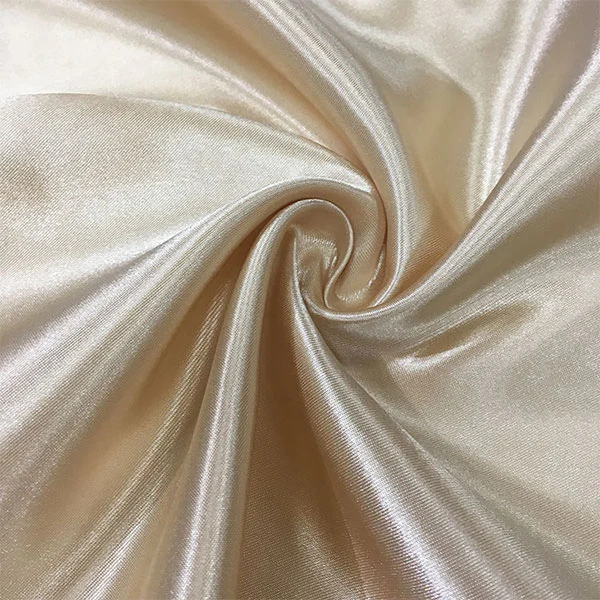
Nylon PU coated Oxford fabric is a high-performance woven textile that combines the inherent strength and toughness of nylon with a polyurethane coating applied to one or both sides. The nylon base delivers abrasion resistance, tensile strength, and durability, while the continuous PU layer enhances water resistance, modifies surface feel, and improves overall weather protection. Final performance always depends on the specific base fabric construction and the coating system chosen, making careful specification essential for buyers, designers, and brand owners.
Nylon PU coated Oxford fabric is produced by weaving nylon filament yarns into an Oxford construction and then applying a polyurethane coating. Nylon filaments are extruded, drawn, and texturized to the required denier before being woven. The resulting fabric is prepared, coated with a liquid or paste PU formulation, dried, cured, and finished. Coating methods and process parameters vary by supplier, so consistent production control is critical to achieving uniform adhesion, thickness, and performance.
Oxford fabric is distinguished by its characteristic basket-weave or textured appearance created by the interlacing of warp and weft yarns. Weave density, yarn count, and construction influence dimensional stability, surface texture, and mechanical properties. The term “Oxford” itself does not define a single universal construction; buyers should always request full specifications rather than relying on the name alone.
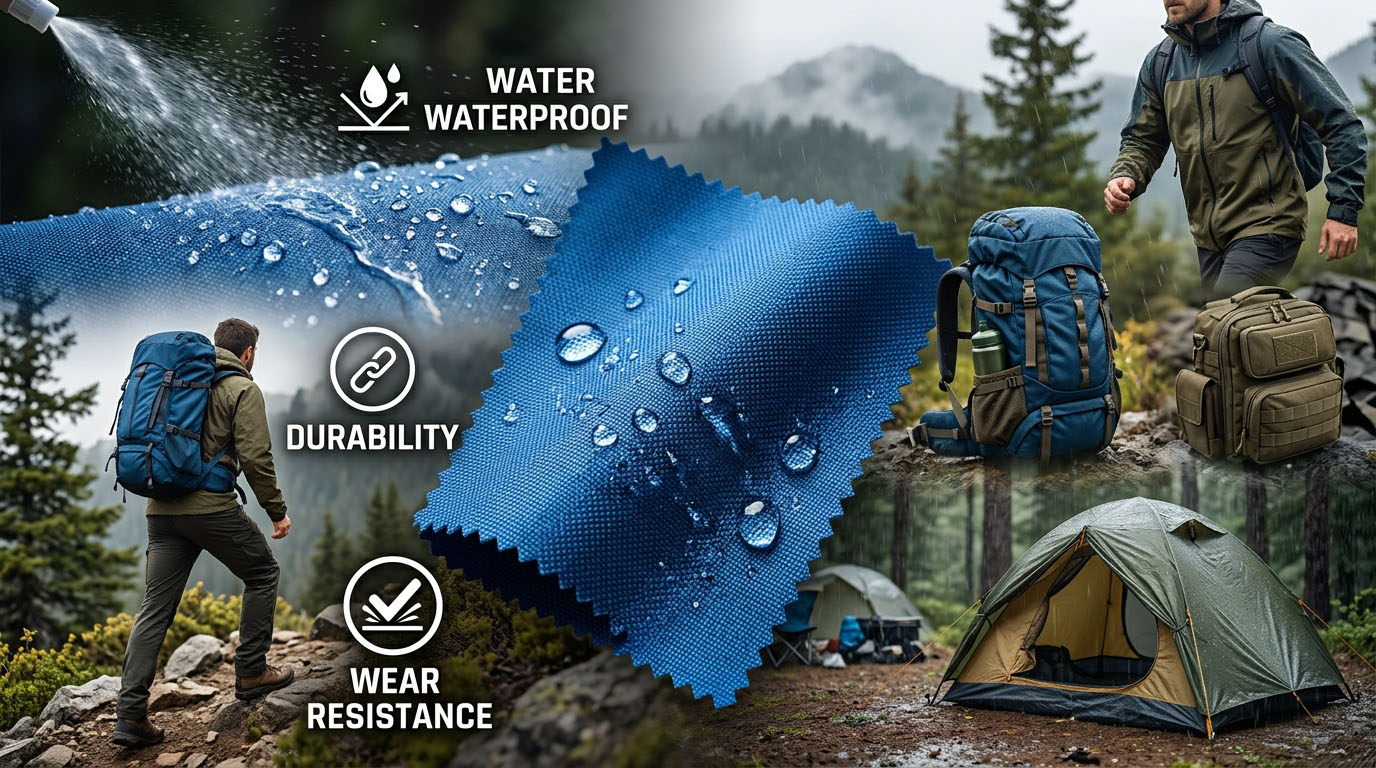
The combination of nylon and PU coating yields a fabric valued for strength, water resistance, flexibility, and versatility. Nylon’s molecular structure provides high tensile and tear strength together with excellent abrasion resistance. These properties are further influenced by yarn denier, fabric density, and weave tightness. A continuous PU coating creates a barrier that significantly reduces water penetration, though the level of protection must be verified by testing rather than assumed. Hydrostatic head measurements become relevant when a defined waterproof rating is required.
Coating formulation and weight directly affect hand feel, flexibility, and finished appearance. Surfaces can be engineered to matte, smooth, or textured finishes according to design needs. Overall fabric weight influences product ergonomics and handling, so designers balance protection against lightness. The material finds wide use in backpacks, luggage, tool bags, storage products, and protective covers, with each application demanding its own balance of properties.
Denier measures the linear density of the yarn. Common starting points include 210D, 420D, 500D, and 840D nylon Oxford. Higher denier generally correlates with greater yarn mass and potential strength, yet denier alone never determines finished fabric performance. Warp and weft density, weave structure, and finishing all play decisive roles. Buyers should request complete construction data rather than selecting by denier category.
Fabric weight is expressed in grams per square meter (GSM). Base fabric weight, coating weight, and total finished weight must be distinguished. Coating thickness contributes to overall caliper but is not identical to it. Clear differentiation of these values allows accurate comparison between supplier offerings and proper matching to product requirements.
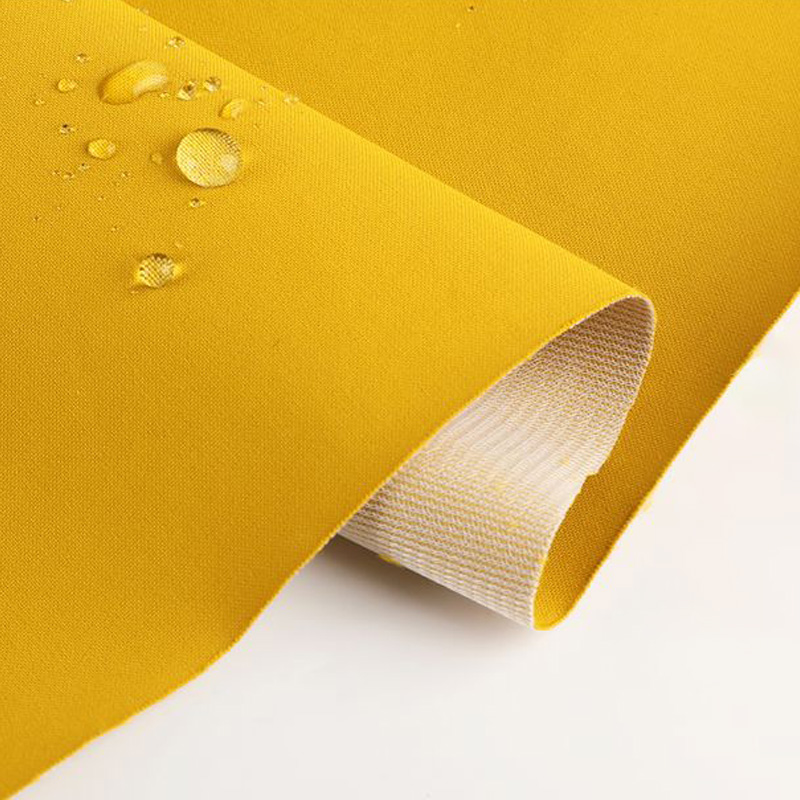
A continuous, uniform PU coating forms a physical barrier that limits water passage through the fabric. Continuity and adhesion of the coating are essential; any pinholes or thin spots reduce effectiveness. Water-repellent finishes work differently by encouraging water to bead on the surface without forming a continuous film. The two approaches can be combined, yet they are not interchangeable. When a specific level of water protection is needed, hydrostatic head testing provides a quantitative measure of resistance to water pressure. Buyers should specify the test method, required rating, and acceptance criteria. Even a high-performing fabric can be compromised by seams, stitch holes, zippers, or other construction details in the finished product.
Coating weight affects finished GSM, flexibility, hand feel, and water resistance. A thicker coating does not automatically deliver superior performance; formulation chemistry, application uniformity, and adhesion quality are equally important. Specifying the required functional properties is more reliable than requesting thickness alone.
Surface abrasion from repeated friction can wear the coating, while poor adhesion may lead to peeling or flaking. Abrasion resistance and coating adhesion are related but distinct properties and should both be evaluated. Some polyurethane systems are susceptible to hydrolysis under prolonged heat and humidity; relevant test data should be reviewed for products destined for humid environments. Repeated folding, bending, cutting, and sewing also stress the coating, so application-specific trials are recommended before bulk production.
| Property | PU-coated nylon Oxford | Uncoated nylon Oxford |
| Water resistance | Enhanced by coating | Depends on construction and finishing |
| Surface feel | Modified by coating | More reflective of the base fabric |
| Air permeability | Often reduced | Depends on weave and finish |
| Finished weight | Includes coating weight | No PU coating weight |
| Best fit | Products needing added water protection | Products prioritizing uncoated feel or airflow |
PU-coated fabric is the logical choice when water resistance and surface protection are priorities. Uncoated fabric may be preferred when breathability, lighter weight, or the original nylon hand is more important. Final selection should always be confirmed by testing under actual product conditions.
| Feature | PU | PVC | TPU |
| Material | Polyurethane | Polyvinyl chloride | Thermoplastic polyurethane |
| Typical characteristics | Flexible finishes and varied surface feel | Formulations can provide body and cost control | Flexible film or coating constructions |
| Common consideration | Hydrolysis performance varies by chemistry | Additives and formulation affect performance | Processing and cost depend on construction |
| Selection priority | Required finish and durability | Cost and required functional properties | Film performance and application needs |
Selection among PU, PVC, and TPU depends on the required balance of water protection, flexibility, abrasion performance, processing behavior, chemical compliance, and cost. No single coating type is universally superior. Evaluation of actual technical specifications is more reliable than reliance on material names alone.
Backpacks, travel bags, tool bags, and storage products benefit from the fabric’s abrasion resistance, tear strength, water resistance, and sewing performance. Outdoor equipment covers and selected camping accessories rely on its ability to withstand rain exposure, humidity, and sunlight over the expected service life. Industrial protective covers can also use appropriate specifications, provided any additional requirements such as chemical resistance or flame retardancy are verified separately. In every case the fabric must be matched to the specific balance of weight, strength, flexibility, and water protection demanded by the end product.
Begin by defining the intended use, loading conditions, exposure to rain, humidity and sunlight, frequency of use, and expected service life. Confirm technical specifications including nylon type, denier, weave, density, base and finished weights, width, and coating side. Establish required performance levels for water resistance, tensile and tear strength, abrasion resistance, and coating adhesion. Agree on test methods, minimum values, tolerances, and sample-approval procedures before production. Finally, verify compatibility with cutting, sewing, and seam construction; trial samples are often necessary.
Before placing bulk orders, inspect color consistency, surface uniformity, hand feel, flexibility, and coating condition. Verify base fabric construction and finished weight. Request full technical data sheets and physical samples. Relevant laboratory tests typically include hydrostatic head for water resistance, tensile and tear strength for mechanical performance, abrasion and coating adhesion for high-wear applications, and hydrolysis resistance when humid service conditions are expected. Any specialized functional claims require corresponding compliance testing. Test methods and acceptance limits should be agreed in writing in advance.
Evaluate a supplier’s technical knowledge, available test data, production consistency, and communication quality. Confirm the ability to arrange third-party testing when needed. Pricing is influenced by yarn specifications, fabric density, coating formulation, finishing, and degree of customization. Clarify minimum order quantity and lead times early. Customization options commonly include color, width, coating weight, surface finish, and performance targets. Document approved samples, full specifications, tolerances, and quality standards to support long-term supply consistency.
Buyers evaluating Nylon PU Coated Oxford Fabric for a new project can contact our team at Ningbo Nashe Textile Co., Ltd to discuss application requirements, request samples, and confirm available specifications.
Recycled nylon and other project-specific material options are available for buyers with sustainability goals. Any environmental claims must be supported by verifiable documentation. Chemical compliance, relevant certifications, and realistic service life should be confirmed. No coating chemistry or recycled content is automatically preferable; performance and documentation must be evaluated for each specific project.
Nylon base fabric construction and PU coating characteristics together determine the finished performance of Nylon PU Coated Oxford Fabric. The right specification balances application demands for water resistance, strength, weight, durability, flexibility, and processing compatibility. Request physical samples, verify supporting test data, and lock specifications and tolerances before committing to bulk production.
14.1 What Is Nylon PU Coated Oxford Fabric?
It is a woven nylon Oxford fabric finished with a polyurethane coating on one or both sides. The nylon provides strength and abrasion resistance; the PU layer adds water resistance and modifies surface properties.
14.2 Is Nylon PU Coated Oxford Fabric Waterproof?
The coating can deliver useful water resistance, but actual waterproof performance depends on coating continuity, formulation, fabric construction, and verified hydrostatic head or equivalent test results.
14.3 What Is the Difference Between PU-Coated and Uncoated Nylon Oxford Fabric?
PU-coated fabric offers enhanced water protection, a modified surface feel, and higher finished weight, often with reduced air permeability. Uncoated fabric retains more of the original nylon hand and airflow characteristics.
14.4 Is 420D or 840D Nylon Oxford Fabric Better?
Neither is inherently superior. The correct choice depends on overall construction, required strength, weight targets, flexibility, and confirmed laboratory performance for the specific end use.
14.5 How Can Buyers Check PU Coating Quality?
Examine coating uniformity and surface condition, then request adhesion, abrasion, and relevant durability test data. Hydrolysis resistance testing is advisable for humid environments.
14.6 How Should Buyers Select a Nylon PU Coated Oxford Fabric Supplier?
Review technical specifications, evaluate physical samples and test reports, assess production consistency, and confirm customization and communication capabilities.
-