News

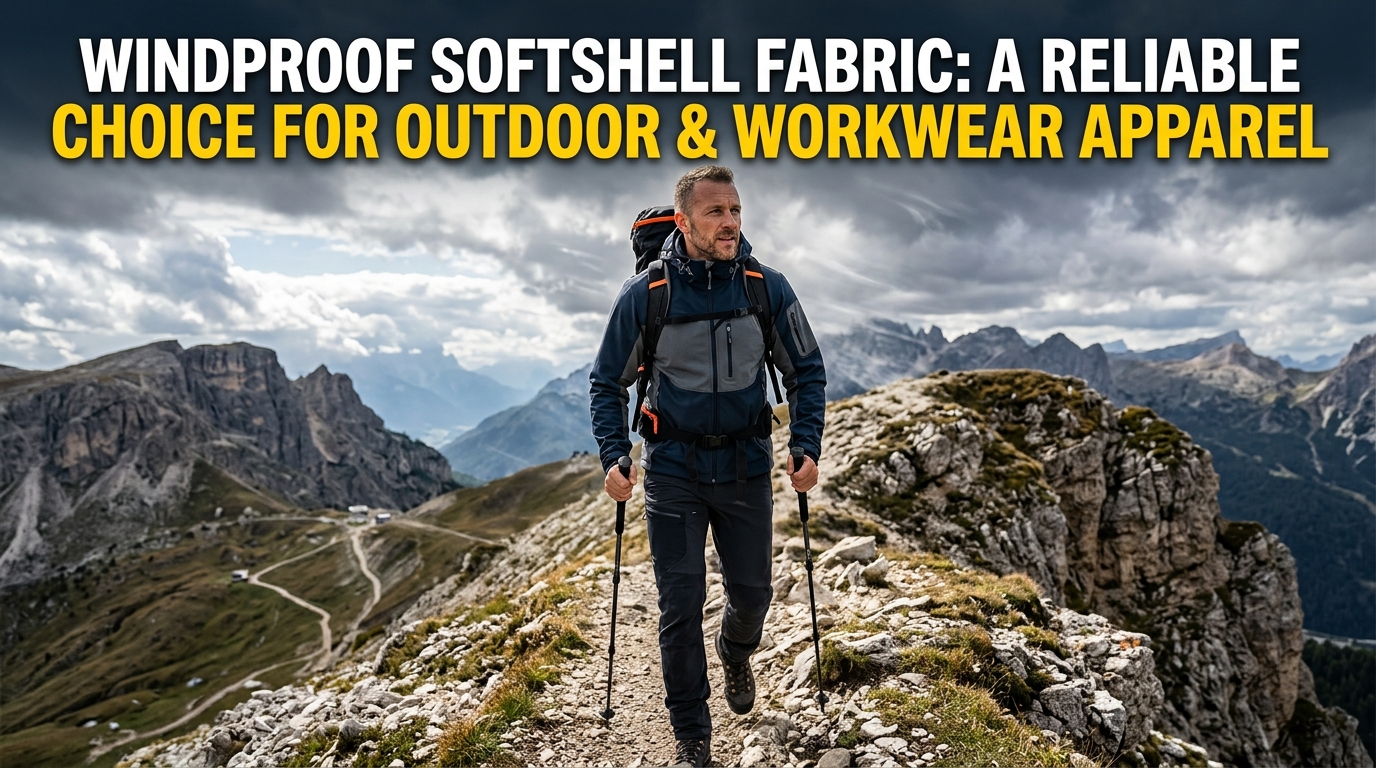
Windproof Softshell Fabric: A Reliable Choice for Outdoor and Workwear Apparel

2026-09-18 0 Leave me a message

Table of Contents

  1. What Is Windproof Softshell Fabric?
  2. How Does Windproof Softshell Fabric Provide Wind Protection?
  3. Windproof Softshell Fabric Construction
  4. Key Performance Characteristics of Windproof Softshell Fabric
  5. Windproof Softshell Fabric vs. Conventional Windproof Fabrics
  6. Outdoor Applications of Windproof Softshell Fabric
  7. Workwear Applications of Windproof Softshell Fabric
  8. How to Select Windproof Softshell Fabric
  9. Quality Control and Manufacturing Considerations
  10. Future Trends in Windproof Softshell Fabric
  11. Conclusion
  12. Frequently Asked Questions

1. What Is Windproof Softshell Fabric?

1.1 Windproof Softshell Fabric Definition

Windproof softshell fabric is a functional textile engineered to significantly reduce wind penetration while delivering flexibility, comfort, and weather resistance in a single material. Unlike everyday apparel fabrics that prioritize appearance or basic wearability, this performance fabric is purpose-built for environments where conditions change rapidly. It combines a dense or membrane-supported structure with stretch and soft hand feel, allowing garments to protect the wearer without restricting movement. In outdoor and workwear contexts, effective wind protection is essential because moving air accelerates heat loss and can quickly turn mild temperatures into uncomfortable or even hazardous conditions.

1.2 Why Wind Protection Matters in Outdoor Apparel

Moving air increases the rate of convective heat loss from the body, making ambient temperatures feel colder than they actually are. For activities such as hiking, camping, mountaineering, cycling, travel, and general outdoor recreation, this effect can reduce comfort, lower performance, and raise the risk of chill. Windproof softshell fabric addresses the problem by limiting air infiltration through the garment shell while still permitting enough vapor transfer to manage internal moisture generated by activity. The result is a more stable microclimate next to the skin, enabling users to remain outdoors longer with fewer layers and greater freedom of movement.

1.3 Why Windproof Softshell Fabric Is Also Suitable for Workwear

Construction sites, landscaping operations, logistics yards, and outdoor maintenance roles expose workers to persistent wind, friction, repetitive motion, and sudden weather shifts. In these settings, garments must protect against wind chill without sacrificing the mobility required for lifting, bending, climbing, or operating equipment. Windproof softshell fabric balances these demands by offering durable wind resistance, abrasion tolerance, and stretch in constructions that remain comfortable during long shifts. The combination supports both safety and productivity, making softshell a practical alternative to rigid conventional workwear shells.

2. How Does Windproof Softshell Fabric Provide Wind Protection?

2.1 Dense Textile Construction

Wind resistance begins with the physical structure of the fabric. Tight yarn packing, careful selection of filament or spun yarns, and dense weave or knit constructions reduce the pathways through which air can pass. Higher fabric density generally lowers air permeability, although the precise level of wind blocking depends on the interplay of yarn type, denier, and finishing. Designers and buyers evaluate these parameters to achieve the required balance between protection and other performance attributes.

2.2 Functional Membranes and Coatings

Many windproof softshell fabrics incorporate an additional functional layer—commonly polyurethane (PU), thermoplastic polyurethane (TPU), polytetrafluoroethylene (PTFE), or related membrane technologies—to further restrict air flow. These layers can be applied as coatings or laminated films. Not every softshell relies on a membrane; some achieve adequate wind resistance through dense face fabrics alone. When membranes are used, their contribution to wind blocking must be assessed alongside their effect on moisture vapor transmission and overall hand feel.

2.3 Air Permeability and Windproof Performance

Air permeability is a key measurable indicator of wind resistance. Lower values generally correlate with better wind protection, yet extremely low permeability can compromise breathability. Effective softshell design therefore evaluates air permeability in conjunction with moisture management metrics so that the fabric blocks external wind while still allowing internal vapor to escape. Laboratory data on both properties provide a clearer picture than marketing claims alone.

3. Windproof Softshell Fabric Construction

3.1 Three-Layer Softshell Construction

A widely used architecture consists of an outer textile face, a functional membrane or coating, and an inner backing layer. The outer face provides the first line of defense against wind, abrasion, and light precipitation. The middle layer contributes weather protection and moisture control. The inner backing improves comfort, manages moisture next to the skin, and can add modest insulation. Each component can be varied independently to meet specific end-use requirements.

3.2 Outer Layer

The face fabric is selected for wind resistance, surface abrasion resistance, and durable water-repellent behavior. It also determines the visual appearance and long-term surface durability of the garment. High-quality outer layers maintain their protective properties after repeated flexing and exposure to dirt or vegetation.

3.3 Membrane or Coating Layer

PU, TPU, PTFE, and similar technologies can enhance both wind blocking and moisture vapor transfer. Performance differs markedly depending on membrane thickness, porosity, and lamination method. Buyers should request test data rather than assuming equivalent behavior across all membrane-containing softshells.

3.4 Inner Backing Layer

Backing options include knitted constructions, fleece, brushed surfaces, soft-touch finishes, and lightweight meshes. Fleece backings add warmth and a plush hand feel; lighter knitted or brushed backs prioritize moisture management and reduced bulk. The choice of backing directly influences comfort, thermal characteristics, and the garment’s suitability for different activity levels.

3.5 2-Way Stretch vs. 4-Way Stretch

Two-way stretch fabrics elongate primarily in one direction (usually the width), offering improved mobility for many jackets and trousers. Four-way stretch constructions extend in both length and width, providing greater freedom of movement for dynamic activities such as climbing, cycling, or work that involves frequent reaching and bending. Garment designers select the stretch type according to the range of motion required by the intended use.

4. Key Performance Characteristics of Windproof Softshell Fabric

4.1 Windproof Performance

Wind resistance is the defining attribute of this fabric category. Construction density, membrane integrity, and surface finishes all influence the final level of protection. Consistent performance across production lots is essential for reliable garment specifications.

4.2 Breathability and Moisture Management

A fabric that blocks external wind must still manage the moisture generated by the wearer’s activity. Metrics such as moisture vapor transmission rate (MVTR), resistance to evaporative heat transfer (RET), air permeability, and overall sweat management describe different aspects of this capability. Balanced softshell constructions maintain comfort during moderate to high exertion by allowing vapor to escape while limiting cold air entry.

4.3 Water Repellency and Water Resistance

Water-repellent surfaces cause liquid water to bead and roll off; water-resistant fabrics resist penetration under light pressure; waterproof constructions prevent liquid ingress under higher hydrostatic pressure. Durable water-repellent (DWR) finishes are commonly applied to softshell faces. Final weather protection of a finished garment also depends on seam construction, zipper design, and overall pattern engineering.

4.4 Stretch and Freedom of Movement

Mechanical stretch from fabric structure and elastic yarns (often elastane) enable unrestricted motion during hiking, climbing, cycling, and physical labor. Both two-way and four-way stretch constructions improve wearer comfort and reduce the need for oversized or heavily articulated patterns.

4.5 Abrasion and Tear Resistance

Outdoor and work environments subject garments to repeated contact with rock, equipment, vegetation, and rough surfaces. High-wear zones—shoulders, elbows, knees, cuffs, and trouser hems—benefit from elevated abrasion and tear strength. Softshell constructions that maintain these properties after washing and flexing deliver longer service life.

4.6 Thermal Performance and Fabric Weight

Fabric weight measured in grams per square meter (GSM) influences bulk and perceived warmth but does not alone determine insulation. Backing structure, fleece density, air-trapping capacity, climate, and activity level all interact. Lightweight softshells can provide excellent wind protection with minimal thermal addition, while heavier fleece-backed versions suit colder or less active conditions.

5. Windproof Softshell Fabric vs. Conventional Windproof Fabrics

Conventional dense woven fabrics can deliver strong wind resistance through tight construction, yet they often prioritize barrier performance over stretch and soft hand feel. Softshell constructions integrate protection with elasticity and comfort, expanding the range of garments in which wind resistance can be applied without sacrificing mobility.

5.1 Performance Comparison

Characteristic Windproof Softshell Fabric Conventional Dense Woven Fabric
Wind protection High, depending on construction High, depending on density
Stretch Often available May be limited
Freedom of movement Generally strong Construction-dependent
Breathability Construction-dependent Construction-dependent
Water repellency Often available Often available
Comfort Often soft/flexible Can be more structured
Fleece backing Available in some versions Less typical
Outdoor sports use Common Common
Workwear use Common Common

5.2 Why the Application Should Determine Fabric Choice

Neither softshell nor conventional dense woven fabric is universally superior. Product developers match construction, stretch, weight, and durability to the actual demands of climate, activity intensity, abrasion exposure, and target retail price. Selecting the wrong balance can compromise either protection or wearer comfort.


6. Outdoor Applications of Windproof Softshell Fabric

6.1 Windproof Softshell Fabric for Hiking Jackets

Hiking jackets benefit from lightweight softshell constructions that combine reliable wind blocking with stretch and adequate breathability. These garments support all-day movement on trails while resisting light precipitation and remaining packable.

6.2 Windproof Softshell Fabric for Mountaineering

Mountaineering softshells emphasize mobility across varied terrain, abrasion resistance against rock, and compatibility with layering systems. Changing weather and high physical output demand fabrics that manage both external wind and internal moisture effectively.

6.3 Windproof Softshell Fabric for Cycling

Cycling applications prioritize wind protection on the torso and arms, stretch for pedaling motion, and moisture management under exertion. Lightweight constructions reduce fatigue while maintaining a stable thermal environment at speed.

6.4 Windproof Softshell Fabric for Camping and Travel

Camping and travel garments value comfort, packability, and versatile weather resistance. Softshell fabrics that balance wind blocking with soft hand feel and moderate water repellency serve well across multi-day itineraries.

6.5 Windproof Softshell Pants

Softshell pants require particularly good stretch around the knees, hips, and seat, together with elevated abrasion resistance in high-contact zones. These attributes support both trail mobility and durability under load-bearing or seated use.

7. Workwear Applications of Windproof Softshell Fabric

7.1 Construction Workwear

Construction environments demand high abrasion and tear strength, consistent wind protection, and mobility for climbing and material handling. Softshell fabrics engineered for these priorities withstand long-term wear while remaining comfortable during extended shifts.

7.2 Landscaping and Outdoor Maintenance

Workers in landscaping and outdoor maintenance encounter wind, light rain, dirt, vegetation, and continuous movement. Softshell constructions that resist abrasion from tools and plant material while providing stretch and wind blocking improve both protection and productivity.

7.3 Logistics and Outdoor Operations

Logistics and outdoor operations personnel spend long periods outdoors with frequent bending, reaching, and walking. Comfortable, wind-resistant softshell garments reduce fatigue and help maintain focus in variable weather.

7.4 Workwear Softshell vs. Outdoor Sports Softshell

Requirement Outdoor Apparel Workwear
Wind protection High High
Stretch High Medium to high
Breathability High Medium to high
Abrasion resistance Medium to high High
Tear strength Medium to high High
Lightweight performance Often important Application-dependent
Fleece backing Optional Application-dependent
Long-term durability Important Very important

Workwear softshells typically place greater emphasis on abrasion, tear strength, and multi-year durability, while outdoor sports versions often prioritize lower weight and higher stretch for athletic performance.

8. How to Select Windproof Softshell Fabric

8.1 Start With the End Use

Selection begins by defining the climate, activity intensity, whether the garment serves sports or work purposes, exposure to rain, abrasion risk, stretch requirements, and any need for insulation. Clear answers to these questions guide the remaining technical decisions.

8.2 Check Fiber Composition

Polyester, nylon, and elastane-containing blends are common. Recycled polyester and recycled nylon options support sustainability targets. Fiber choice should be driven by required strength, stretch recovery, and moisture behavior rather than assumptions about inherent superiority of one polymer.

8.3 Evaluate GSM and Fabric Weight

GSM influences garment weight, drape, and potential thermal contribution. It must be assessed together with construction density and backing type, because two fabrics of identical weight can perform very differently.

8.4 Check Stretch Performance

Determine whether two-way or four-way stretch better matches the garment’s range-of-motion needs. Test recovery after repeated extension to ensure long-term fit retention.

8.5 Evaluate Water and Wind Performance

Request laboratory data on air permeability, hydrostatic head or spray ratings, and DWR durability rather than relying solely on descriptive terms such as “windproof” or “water resistant.”

8.6 Check Breathability

Review MVTR, RET, and air-permeability results. Recognize that these methods measure different aspects of moisture and air transfer and are not directly interchangeable.

8.7 Evaluate Durability

Examine abrasion resistance, tear strength, tensile strength, pilling resistance, and dimensional stability after washing. These properties determine how the fabric will perform over the expected service life of the garment.

8.8 Consider Garment Cost and Target Market

Higher performance specifications and more complex constructions increase fabric cost and manufacturing complexity. Align fabric selection with the intended retail price point and brand positioning to maintain commercial viability.

9. Quality Control and Manufacturing Considerations

9.1 Fabric Inspection Before Production

Incoming fabric should be checked for GSM, width, color consistency, surface defects, stretch behavior, hand feel, and key functional properties. Early detection of deviations prevents costly production issues.

9.2 Batch-to-Batch Consistency

Large apparel programs require consistent color, width, GSM, stretch, wind resistance, water-repellent performance, and breathability across successive lots. Supplier process control and documentation support this reliability.

9.3 Cutting and Sewing Performance

Laboratory results alone do not guarantee manufacturing success. Fabric stability under cutting, sewing, and pressing influences seam quality, garment appearance, and final dimensional consistency.

9.4 Testing and Documentation

Request full technical specifications and relevant third-party or in-house test reports before committing to bulk production. Clear documentation reduces risk and facilitates quality agreements.

10.1 Lightweight Softshell Construction

Demand continues for lighter fabrics that retain wind protection, stretch, and durability, enabling more versatile year-round garments with reduced bulk.

10.2 Recycled Fibers

Recycled polyester and recycled nylon are increasingly specified by brands pursuing measurable sustainability goals without sacrificing core performance.

10.3 Fluorine-Free Water Repellent Finishes

Interest in fluorine-free DWR technologies is growing as brands respond to regulatory and environmental considerations while seeking comparable beading and durability.

10.4 Advanced Stretch Construction

Improved yarn and fabric engineering delivers higher mobility with minimal weight penalty, supporting more athletic and workwear designs.

10.5 Multifunctional Performance

The market continues to favor softshell fabrics that simultaneously deliver wind protection, water resistance, breathability, stretch, abrasion resistance, and comfort in a single material platform.

11. Conclusion

Windproof softshell fabric is far more than a simple wind-blocking material. Its final performance is determined by the interplay of face construction, membrane or coating technology, fiber composition, stretch characteristics, backing structure, finishing treatments, and overall weight. The optimal specification depends on climate, activity level, work environment, garment design, durability expectations, target market, and cost constraints.

Buyers, designers, and wholesalers who systematically match these variables to end-use requirements obtain garments that protect effectively, move comfortably, and deliver lasting value. For application-specific recommendations and fabric development support, contact the technical team at Ningbo Nashe Textile Co., Ltd.

12. Frequently Asked Questions

12.1 What Is Windproof Softshell Fabric?
Windproof softshell fabric is a functional textile designed to limit wind penetration while providing stretch, comfort, and weather resistance. It is widely used in outdoor apparel and workwear where protection and mobility must coexist.

12.2 Is Windproof Softshell Fabric Waterproof?
Windproof and waterproof are distinct properties. Many softshells offer water-repellent or water-resistant performance through DWR finishes, membranes, or coatings, yet true waterproofing also depends on seam sealing, zipper design, and overall garment construction.

12.3 Is Softshell Fabric Breathable?
Breathability varies with construction, membrane or coating type, backing, and finishing. Well-engineered softshells balance wind resistance with adequate moisture vapor transmission so that internal moisture can escape during activity.

12.4 What Is the Difference Between 2-Way and 4-Way Stretch Softshell Fabric?
Two-way stretch primarily elongates in one direction, typically the width. Four-way stretch extends in both length and width, offering greater freedom of movement for dynamic activities.

12.5 Is Windproof Softshell Fabric Suitable for Workwear?
Yes. Its combination of wind protection, stretch, durability, and comfort makes softshell well suited to many outdoor work environments, provided the specific construction meets abrasion and tear requirements.

12.6 What GSM Is Best for Windproof Softshell Fabric?
No single GSM is ideal for every application. Appropriate weight depends on climate, activity intensity, insulation needs, garment design, and target market.

12.7 What Is DWR on Softshell Fabric?
Durable water-repellent (DWR) is a surface treatment that causes liquid water to bead and roll off rather than wet the fabric face, improving short-term weather resistance and maintaining better breathability under light precipitation.

12.8 How Should Windproof Softshell Fabric Be Selected?
Selection should consider construction type, fiber composition, GSM, stretch direction and recovery, measured wind resistance, water performance, breathability metrics, abrasion and tear strength, and the precise end-use requirements of the finished garment.

Related News
Leave me a message
X
We use cookies to offer you a better browsing experience, analyze site traffic and personalize content. By using this site, you agree to our use of cookies.Privacy Policy
RejectAccept