News

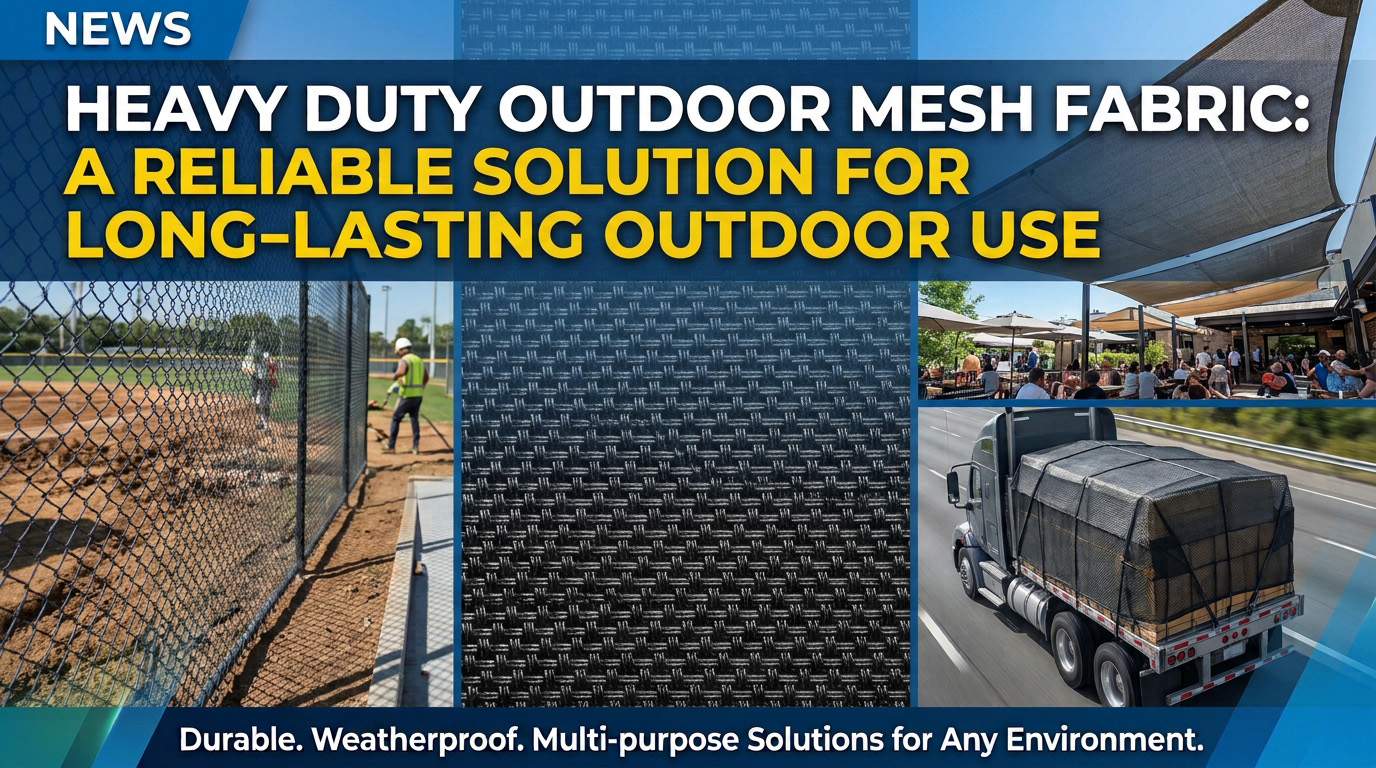
Heavy Duty Outdoor Mesh Fabric: A Reliable Solution for Long-Lasting Outdoor Use

2026-11-13 0 Leave me a message

Heavy duty outdoor mesh fabric stands as a high-strength textile engineered specifically for the challenges of demanding outdoor environments. Unlike ordinary lightweight mesh fabrics used for indoor screening or temporary applications, this material combines robust yarn construction with specialized finishing to deliver lasting performance under continuous exposure to sunlight, moisture, wind, and mechanical stress. Its defining advantages include high tensile strength, excellent breathability and drainage, reliable UV resistance, and overall weather durability. These qualities make it suitable for outdoor furniture, awnings and shade structures, camping equipment, fencing and protective barriers, agricultural nets, and various industrial uses. Selecting the right heavy duty outdoor mesh fabric requires a clear understanding of its material composition, construction methods, and measurable performance specifications rather than relying solely on appearance or basic weight figures.

Table of Contents

  1. What Is Heavy Duty Outdoor Mesh Fabric?
  2. Outdoor Mesh Fabric Construction and Manufacturing Process
  3. Fiber Materials and Their Outdoor Performance
  4. Mesh Structure, Opening Size and Fabric Density
  5. Key Performance Characteristics of Heavy Duty Outdoor Mesh Fabric
  6. Heavy Duty Outdoor Mesh Fabric vs. Regular Mesh Fabric
  7. Applications of Heavy Duty Outdoor Mesh Fabric
  8. How to Choose the Right Heavy Duty Outdoor Mesh Fabric
  9. Sample Evaluation and Quality Control
  10. Supplier Capability and Customization
  11. Cost, MOQ and Long-Term Supply
  12. Future Trends and Material Development
  13. Conclusion
  14. Frequently Asked Questions About Heavy Duty Outdoor Mesh Fabric

1. What Is Heavy Duty Outdoor Mesh Fabric?

Heavy duty outdoor mesh fabric refers to an open-structure textile built from high-tenacity yarns arranged in a stable mesh pattern and finished for prolonged outdoor service. The combination of strong yarns and durable construction allows the fabric to withstand tension, abrasion, and environmental degradation while remaining open enough for air and water to pass through. This balance of strength and openness distinguishes it from lighter decorative meshes and positions it for applications that must endure real-world outdoor loads and weather cycles.

Its main characteristics include high tensile strength that resists stretching or rupture under load, good tear and abrasion resistance that preserves integrity during repeated handling or contact with frames, UV and weather resistance that slows degradation from sunlight and moisture, inherent breathability and drainage that prevent heat buildup and water accumulation, dimensional stability that limits excessive elongation or distortion, and overall long-term outdoor performance when properly specified and maintained.

Common materials include polyester, valued for its dimensional stability and abrasion resistance; nylon, chosen for toughness and impact strength; polypropylene, appreciated for its low density and water resistance; and variants finished with PVC or PU coatings that add surface protection and improve weather resistance.

2. Outdoor Mesh Fabric Construction and Manufacturing Process

Production begins with careful fiber selection and yarn preparation. Manufacturers choose high-tenacity polyester, nylon, or polypropylene filaments, then process them into yarns of specified thickness and strength. High-tenacity yarns provide the mechanical foundation needed for outdoor loads and repeated stress.

The yarns are then formed into mesh through warp knitting, weft knitting, or weaving. Warp-knitted structures often deliver good dimensional stability and resistance to laddering, while woven meshes can offer higher tensile strength in defined directions. The choice of method influences mesh uniformity, edge stability, and overall fabric behavior under tension.

After fabric formation, functional finishing treatments refine performance. Dyeing establishes color, heat setting stabilizes dimensions, UV stabilizers protect against sunlight degradation, and PVC or PU coatings can enhance surface durability, abrasion resistance, and weather protection. Additional surface finishes may improve cleanability or further reduce friction.

3. Fiber Materials and Their Outdoor Performance

Polyester outdoor mesh fabric offers strong dimensional stability, low moisture absorption, and good abrasion resistance. These traits make it a frequent choice for outdoor furniture, shade products, and applications where consistent shape and moderate to high mechanical demands are expected. UV treatment is typically applied to extend service life under continuous sunlight.

Nylon outdoor mesh fabric provides toughness, impact resistance, and high mechanical strength. It performs well in heavy-duty equipment and protective uses, though its greater moisture absorption and need for effective UV protection must be considered in humid or high-sun environments.

Polypropylene outdoor mesh fabric is lightweight and inherently water-resistant due to its low density and hydrophobic nature. It suits protective nets and applications prioritizing reduced weight, but reliable UV stabilization is essential because polypropylene is more susceptible to sunlight degradation without proper additives.

Selecting the right fiber requires matching environmental exposure, mechanical loads, and expected service life to the material’s inherent strengths. The following comparison summarizes typical considerations:

Material Main Advantages Considerations Typical Applications
Polyester Stability and abrasion resistance UV treatment may be needed Furniture and awnings
Nylon Toughness and impact resistance Moisture and UV performance Heavy-duty equipment
Polypropylene Lightweight and water-resistant UV stabilization Protective nets

4. Mesh Structure, Opening Size and Fabric Density

Outdoor mesh is commonly produced in square, rectangular, diamond, or customized patterns. Opening size directly affects performance: larger openings enhance airflow and drainage, while smaller openings increase coverage and structural density. The chosen geometry also influences how loads are distributed across the fabric.

Yarn thickness and overall fabric density determine strength and stability. Thicker yarns raise tensile capacity and abrasion resistance but add weight; denser constructions improve dimensional control yet may reduce openness. Successful specifications balance these factors so the fabric meets load requirements without unnecessary weight or restricted ventilation.

5. Key Performance Characteristics of Heavy Duty Outdoor Mesh Fabric

Tensile strength measures the force the fabric can sustain before breaking, while tear resistance indicates how well it resists the propagation of a cut or snag. Both properties are critical under continuous tension, wind loads, or point stresses; testing in both warp and weft directions provides a complete picture.

Abrasion resistance governs durability when the mesh contacts metal frames, hardware, or rough outdoor surfaces. Repeated friction can degrade weaker yarns, so abrasion testing helps predict service life in furniture or barrier applications.

UV resistance and broader weather resistance determine how well the fabric retains strength and appearance under sunlight, rain, temperature cycles, and humidity. Ultraviolet radiation can cause fading, embrittlement, and progressive strength loss; stabilizers and weather-resistant treatments slow these effects.

Breathability, airflow, and drainage arise naturally from the open mesh structure. Proper opening size allows air circulation that reduces heat buildup and permits water to pass through rather than pool, which is valuable for seating, shade, and protective covers.

Coatings such as PVC or PU add surface protection, improve abrasion resistance, and can enhance water repellency. Because the mesh remains open, coated fabrics are rarely fully waterproof; water can still pass through the openings, though the yarn surfaces themselves become more resistant to moisture absorption and soiling.

Weight (often expressed as GSM), thickness, and dimensional stability influence handling, installation, and long-term shape retention. Elongation under load must remain within acceptable limits for the intended application. Color fastness—including light, water, and rubbing fastness—along with batch-to-batch consistency ensures the finished product maintains a professional appearance over time.

6. Heavy Duty Outdoor Mesh Fabric vs. Regular Mesh Fabric

Heavy duty versions employ stronger yarn specifications, more stable mesh constructions, and specialized outdoor finishing treatments that regular meshes often lack. The result is superior UV resistance, abrasion resistance, and mechanical strength suited to continuous outdoor exposure.

Compared with solid fabrics, mesh provides superior airflow and drainage at the cost of less complete coverage and privacy. Solid fabrics may offer greater water protection and opacity but typically restrict ventilation. Application requirements determine which structure is appropriate.

A practical comparison of features includes:

Feature Heavy Duty Outdoor Mesh Regular Mesh Solid Fabric
Strength Application-specific high strength Generally lighter Depends on construction
Airflow High potential High potential Usually limited
Drainage Good potential Good potential Depends on material
UV resistance Outdoor treatments available Varies Varies
Coverage Open structure Open structure More complete
Applications Outdoor and industrial uses General-purpose uses Covering and protection

7. Applications of Heavy Duty Outdoor Mesh Fabric

In outdoor furniture and patio seating, the fabric supplies breathability and load-bearing capacity for chairs, loungers, and related pieces that remain outdoors year-round. Shade sails and awnings benefit from air circulation that reduces wind load while still providing UV protection and long-term durability. Camping and outdoor equipment use the material for chairs, storage bags, and compartments where lightweight strength is essential. Fencing and protective barriers rely on its tensile and tear resistance for outdoor partitions and nets. Agricultural and horticultural applications include protection nets and covers that manage light and ventilation. Industrial and transportation uses encompass protective materials, cargo separation systems, and related accessories that demand reliable mechanical performance.

8. How to Choose the Right Heavy Duty Outdoor Mesh Fabric

Begin by identifying the intended application, the expected environmental exposure, and the mechanical loads the fabric will experience. Select the fiber—polyester, nylon, or polypropylene—along with appropriate yarn specifications, mesh opening size, and fabric density. Confirm essential specifications such as GSM, thickness, width, tensile strength, tear strength, abrasion resistance, UV resistance, and color fastness. Evaluate any additional coatings or finishes, including PVC or PU coatings and UV stabilization, against the performance targets of the final product.

9. Sample Evaluation and Quality Control

Physical inspection of samples should verify mesh uniformity, yarn integrity, absence of surface defects, color consistency, and coating uniformity where applicable. Performance testing typically covers tensile and tear strength, abrasion resistance, UV aging, and dimensional stability. For bulk production, approved samples become the reference standard; acceptance criteria and batch-consistency checks help maintain quality across deliveries.

10. Supplier Capability and Customization

A capable supplier brings material knowledge, reliable manufacturing processes, robust quality-control systems, and consistent production output. Customization options commonly include fiber composition, yarn thickness, mesh opening size, GSM, width, color, and coatings. When evaluating partners for outdoor mesh fabric, clear communication of application requirements is essential. Ningbo Nashe Textile Co., Ltd, a manufacturer based in Ningbo, China, with experience in high-performance and functional fabrics since 2013, works with clients from prototype development through bulk production. Contact our team to discuss specific outdoor mesh requirements and receive material recommendations matched to your end use.

11. Cost, MOQ and Long-Term Supply

Prices are influenced by raw-material costs, yarn specifications, GSM and density, coatings and finishing, and the degree of customization. Minimum order quantities vary by construction and whether stock or custom production is involved; sample development and bulk lead times should be clarified early. Long-term purchasing value depends on service life, replacement frequency, supply consistency, and total cost of ownership rather than unit price alone.

Development continues toward lighter yet higher-strength mesh constructions through improved yarn structures and optimized designs. Sustainable options, including recycled polyester and more efficient manufacturing, are gaining attention, along with greater emphasis on recyclability. Advanced UV stabilizers and functional coatings further extend outdoor durability and appearance retention.

13. Conclusion

Successful use of heavy duty outdoor mesh fabric rests on informed material selection that considers fiber composition, mesh structure, mechanical strength, and weather resistance together. Thorough sample evaluation, performance testing, and careful supplier assessment reduce risk and support consistent results in bulk purchasing. Ningbo Nashe Textile Co., Ltd offers expertise in high-performance textiles and can assist buyers, designers, and manufacturers in identifying suitable outdoor mesh solutions. Contact our team for recommendations aligned with your specific application requirements.

14. Frequently Asked Questions About Heavy Duty Outdoor Mesh Fabric

Q1: What Is Heavy Duty Outdoor Mesh Fabric?
Heavy duty outdoor mesh fabric is constructed from high-tenacity yarns in a stable open mesh and finished for outdoor durability. Its primary purpose is to provide strength, breathability, drainage, and weather resistance in demanding exterior applications.

Q2: What Is the Best Material for Outdoor Mesh Fabric?
The best material depends on the application: polyester often suits furniture and shading for its stability, nylon supports heavy-duty equipment needing toughness, and polypropylene works well where light weight and water resistance are priorities, provided UV protection is adequate.

Q3: Is Heavy Duty Outdoor Mesh Fabric Waterproof?
The fabric is not fully waterproof in the conventional sense because water can pass through the mesh openings. Coatings improve surface water resistance and durability, but drainage remains a functional feature of the open structure.

Q4: How Long Does Outdoor Mesh Fabric Last?
Service life varies with material quality, intensity of UV exposure, environmental conditions, mechanical stress, and maintenance. Properly specified and stabilized fabrics can deliver years of reliable outdoor performance.

Q5: Does Heavy Duty Outdoor Mesh Fabric Resist UV Rays?
Yes, when UV stabilizers and appropriate treatments are applied. Independent testing confirms the level of protection and helps predict long-term strength retention.

Q6: What GSM Is Best for Heavy Duty Outdoor Mesh Fabric?
No single GSM is universally best. Weight should be evaluated together with yarn specifications, mesh structure, and measured mechanical performance to match the intended loads and environment.

Q7: Can Outdoor Mesh Fabric Be Customized?
Customization is widely available for materials, colors, widths, mesh openings, GSM, and coatings, allowing the fabric to be tailored to specific product requirements.

Q8: How Do You Maintain Outdoor Mesh Fabric?
Maintenance typically involves regular cleaning to remove dirt and debris, periodic inspection for wear or damage, and appropriate storage when the product is not in continuous use. Avoiding harsh chemicals and following manufacturer guidance helps preserve performance and appearance.

Related News
Leave me a message
X
We use cookies to offer you a better browsing experience, analyze site traffic and personalize content. By using this site, you agree to our use of cookies. Privacy Policy
RejectAccept